Fuel to the Fire…

10400022_443301795845650_4951297029135707657_n

After my last post, it was obvious what I need to do.

The people who don’t want me on the same course as them, that think my getting a finishers medal makes their accomplishment marginal, would like nothing better than for me to go away, go sulk in a corner, leave all the awesome accomplishments to be done for them and those they consider worthy.

Nope. Not doing it.

I’m not going away. I’m not limiting myself to minor events. I am going after the toughest and most badass challenges out there. And thanks to my detractors, I’m going there sooner.

All the negative emotions that this brings up are being harnessed to push me farther, faster, more reps, higher weights, 2-a-day workouts.

You can doubt me all you like. No one ever thought that I was capable of half the things that I have done.

And you have no idea what I will yet prove to be capable of.

i-am-not-the-strongest

“I don’t deserve to be here”?


There are moments in life that hit you like a sucker punch, totally unexpected and able to knock you to your knees. I had one earlier this week.

A simple discussion among friends, talking about the future of obstacle racing. Statements that non-elites have no place at certain events, that the existence of an open heat somehow makes the elite heat unworthy. That those racers who never reach the podium, while they can still run the ordinary courses and keep the bills paid, should never be permitted on the best courses.

That I don’t deserve to be here.


From as far back as I can remember, I have always been told all the things I would never be able to do. “You don’t have the genetics to be a runner.” “Your lungs never fully recovered, you will always be short winded.” “Oh, no, travelling is far too expensive. Not even worth it to get a passport.”

It took 30 years for me to stop listening. And then the world opened up.

England. Japan. France. Running crazy distances through the mountains, seeing things that I can’t even describe to those who I grew up with. Pushing through the cold, the heat, the pain. Achieving nearly everything that they said I never could.

I have earned my right to be here. And there are a few things that you must do before you can tell me that I don’t deserve the chance to run the same course as you:

You must shiver through the last few miles of cold, wet misery at Wolverhampton, shaking so badly that you can’t even manage to drink the hot beverage at the finish line.

You must stare up the steep slopes of Killington, your exhausted mind trying to determine if the clearing you see far above you is where you have been, or where you are going.

After 11 hours of constant suffering, at an event you may never get another chance to complete, you have to give up your chance of finishing to stay behind and look after an injured competitor.

You have to do at least a few events after at least an eight hour drive and on less than two hours of sleep, because that is what is required to get the week’s work done and make it to the starting line.

When you have completed all of these, then MAYBE we can discuss what events I have or have not earned my shot at a DFL finish.

Until then, I’ll see you at the starting line.


Team Onesie: Vermont Spartan Beast 2014 (DNF Files Volume 2)

1235892_10203875516866628_1972975248125606645_n

The Vermont Ultra Beast. The most badass challenge in all of obstacle racing. One of the goals I had set my mind on as soon as I crossed my first finish line and started wondering how far I could take this. And a goal that still remains unachieved.

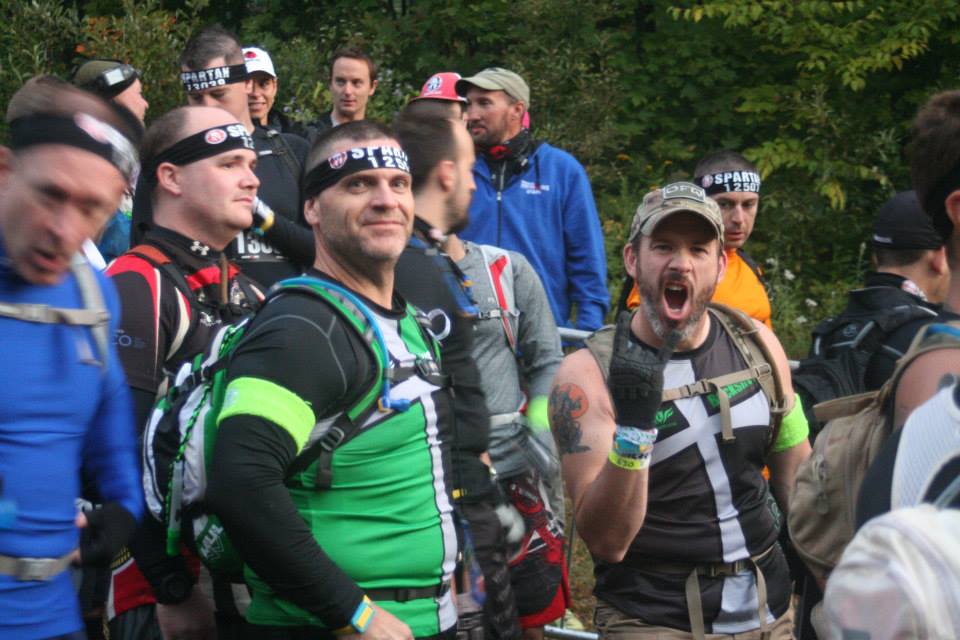
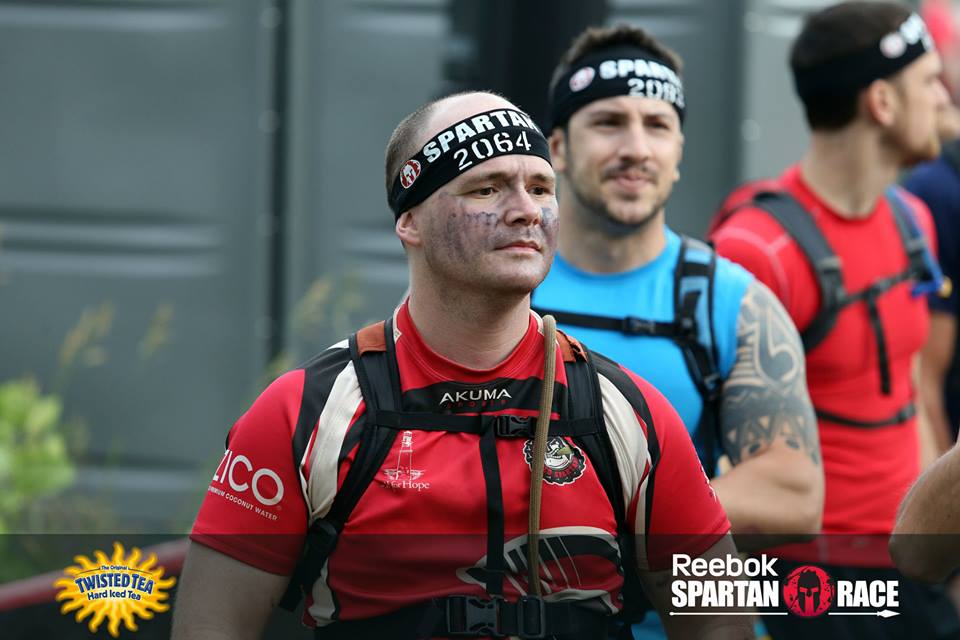
Showed up at OMG dark thirty to drop off drop bins, warm up, say hello to other racers, and realize exactly how far I have roamed this year. “Hey, I know you from Quebec City.” “Haven’t seen you since Tampa, how have you been?” Stumble through the dark to the starting line, listen to a few mind games about needing a 13″ piece of string (you didn’t). I admit that I had more butterflies in the stomach than usual which I think shows in this photo:

10687219_10202709690243887_4292561803854267058_n

Started off with the typical uphill and downhill and first few basic obstacles, short walls and over-under-throughs. Steep rocky trails, finding out that I came a little overdressed and stopping to take off my thermal, to the first sandbag carry (the easy one by comparison, as I would soon find out.)

I hit the first bucket carry still reasonably on pace, but I soon after started falling short. There are a lot of reasons, ways that I will do it differently next time, but the long and short of it is that I did not deliver as much as I needed to.

The Vermont Beast is known for the Tarzan Swing water obstacle, which I knew would take me longer than the required number of burpees, so I burpeed out and went around. Next was wading back through the pond, just to make sure no one skipped this obstacle in hopes of staying dry. Footing was actually better a few feet out, you get wetter but move faster.

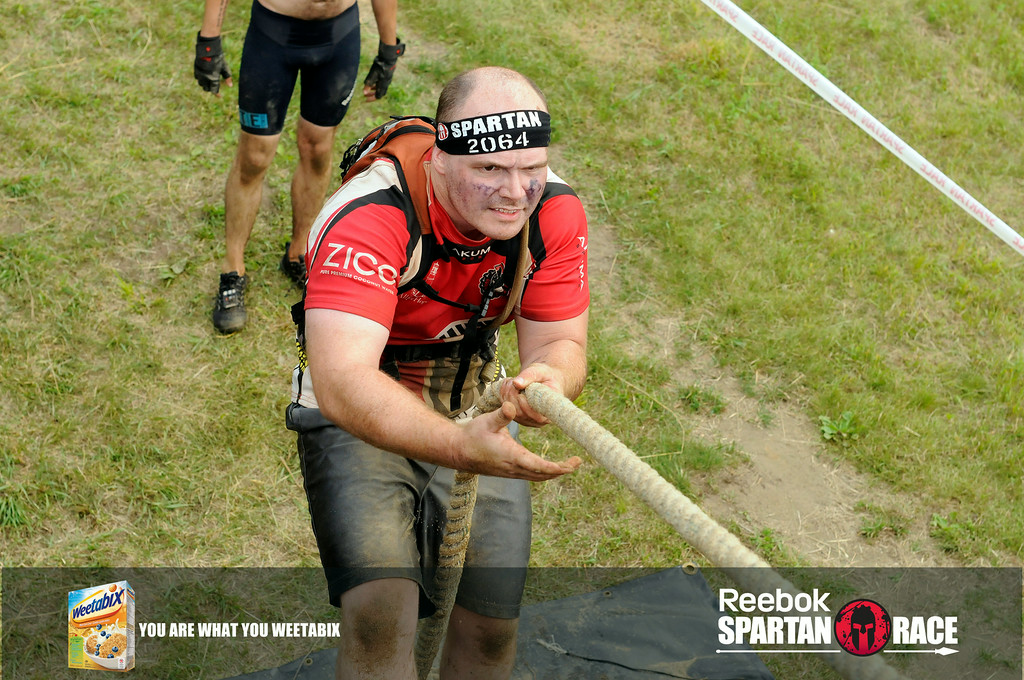
More muddy wooded trails with ungodly uphills, the Atlas Carry (they are getting heavier, but still one of my most reliable obstacles) and a low crawl made more fun by creative volunteers. Whenever anyone became caught in the wire, one of them would become a caricature of the old man driving children off his lawn, yelling and throwing mud at us “young whippersnappers”. It delivered a laugh when we all really needed it.

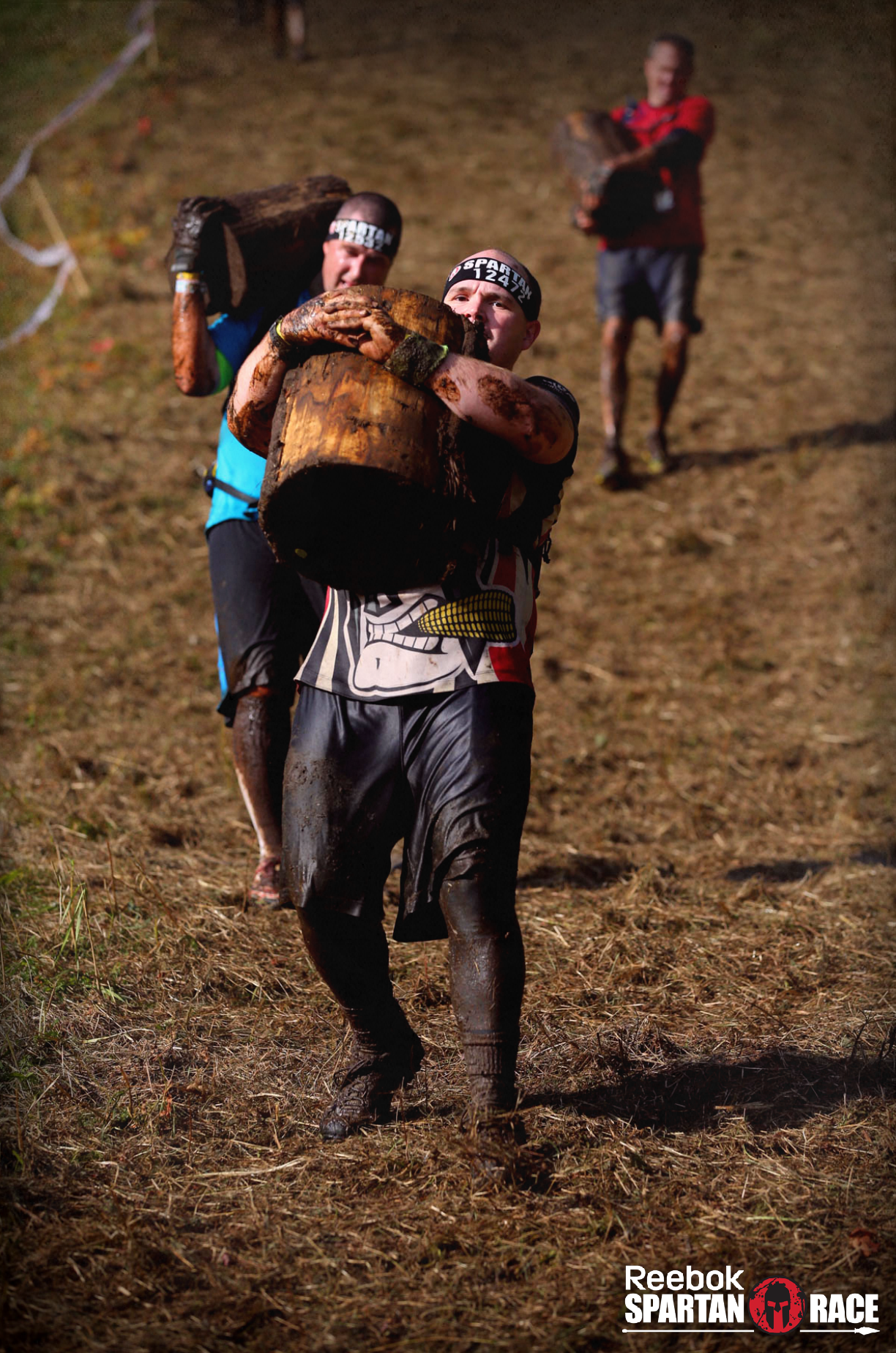
Next was the log carry, brutal uphill but much nicer on the return slope. At some point during this, my feet slipped and as I shifted to keep the log under control, something in my back twisted. I barely noticed it at the time, but it would make itself known a few miles later.

167_0a907bab0225bc81edfa5388b9abae23_SUN_LogCarry (1)

The stump jump obstacle was made tougher by adding a horizontal log that had to be walked across in the center. A fellow racer was kind enough to spot me and I made it through.

More walls, more hills, over a vertical cargo net, and yet more hills. For a flatlander like myself, any obstacle you can put in front of me is preferable to endless vertical terrain, simply because it is so difficult to train for when you don’t have anything that duplicates it.

About this time, as I stopped among the steep, muddy, single track trails to stretch my back and risk overdosing on ibuprofin, I realized that I was not going to make even the first time cutoff. No way in hell am I leaving the course, so I put my wristband (the mark that identified me as an ultra) in my camelback and continued on to get at least one lap done. (Before the comments start, I am aware of the rules against this, but I am also aware that these rules are more on paper than in fact, as most of the volunteers on the course encouraged those who missed the first time cuttoff to downgrade from the Ultra to the Beast.)

The next obstacle of note was likely the high point of the race for me: I approached the spear throw, thinking that it is usually just a formality before you go do burpees. My stunned surprise at seeing the spear stick morphed instantly into a running victory dance, high-fiving the volunteers as I went by.

About this time I caught up with one of my roommates for the trip, who had started out 10 minutes ahead of me and who was having about as good a run today as I was. We teamed up from that point on, at first unintentionally and later stayed together on purpose.

We picked up a few other would-be ultra-beasters downgraded to the beast, what one of us described as “Club Onesie”. As we continued on and helped each other through, that became Team Onesie.

Spartan’s usual method is to use twisting trails, so that you think you are approaching the top, but when you get there its not the top. As I came out of the trees and looked where the path lead, I realized that had actually been a kindness. Actually seeing the uphill in front of me, that many racers came to call the “death march”, was so much worse than the constant thinking you were “almost” to the top. Damn that was a brutal climb, I am told 994 feet up in .7 miles.

It is also a bit of a mind game, for a flat lander, that you can see obstacles in a clearing well above you, and can only think, “Okay, I guess we’re going all the way up there… again.” I remember seeing the tire pull from far below, and thinking “WOOHOO we made it” when we finally got there.

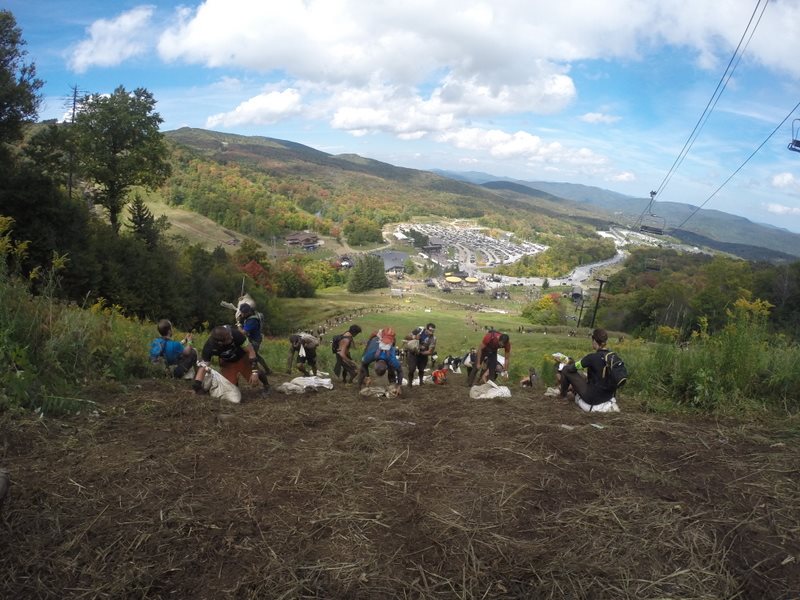
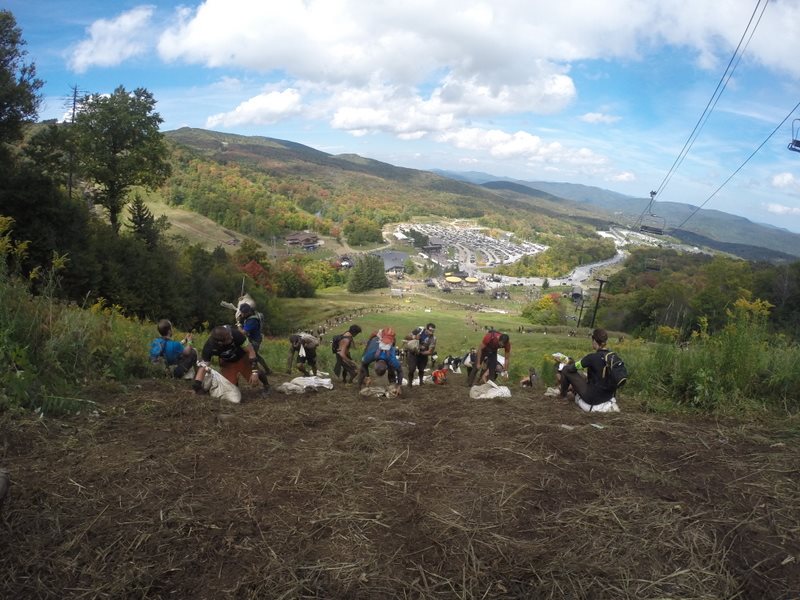
Next was what was basically agreed to be the toughest obstacle ever, the most grueling sandbag carry I have ever seen, heard or thought about. 60 pounds carried up and down the side of a mountain for a little under half a mile. Here is the view from the top:

1235892_10203875516866628_1972975248125606645_n

When I finally got mine to the top, I looked down and saw one of the group having trouble lifting hers. There was nothing else to do: I left mine at the top, got hers the rest of the way to the top and gave it back to her there. That last 100 yards, carrying the second bag to the top, may have been one of the hardest pushes I have ever done.

We regrouped at the water station after the carry, laughed about how people who had just met me today were willing to accept unmarked items from my pack (Reeses Pieces and ibuprofen, never leave home without them) and moved on to the next obstacle. I was familiar with the Rig from Canadian races, but this was the first time any of the others had seen it. As I approached I saw a runner ahead of me fall and not immediately move, so I ran ahead to check on him. He turned out to be okay and we piggybacked each other through the rig.

We had formed into a solid team by the time we hit the last high wall, so much so that we were calling others who were going to skip the obstacle back with, “Dude, I have gotten 50 year old women over this wall, we can get you over it.” And we did.

We then came to a pipe on a chain that had to be traversed hand-over-hand. It was too high over the water below to put people on shoulders, but one of the team suggested knees on shoulders would put us at about the right height, which worked so well that we likely spent 10 minutes helping other racers get through it. I LOVE teamwork in action.

The last climb was a difficult, nasty climb with lots of logs across the path, but when we reached the top we could see the finish line. We regrouped, made sure all of Team Onesie was accounted for, and all charged the finish line together.

High fives, finisher’s medals, recovering our drop bins and changing into dry clothes, and then waiting for news of teammates still on the course. Many would be pulled from the course later, some agonizingly close to the cutoff. A very few, very badass people made it. And as we sat in the dark, watching the somewhat surreal lines of headlamps coming down the mountain, I started planning out my next attempt.

2014-09-21 19.59.27

I overestimated myself and underestimated Mount Killington this year, and I doubt I will be ready to take on the Ultra again next year. So, Vermont Beast both days next year. And the fuzzy green armband that I hid halfway through the course… It will be on my arm every workout until my return.

Accidental Battle Buddies: Gladiator Assault Challenge Wisconsin 2014

I was excited to go back to one of my favorite races from last year. I met a nervous young lady at the start line who said that her friends had agreed to run with her but had backed out, so she was unsure if she could do it, or if she should do the shorter course. I volunteered to battle-buddy her through the course, and she could decide what distance she was doing when we got there.

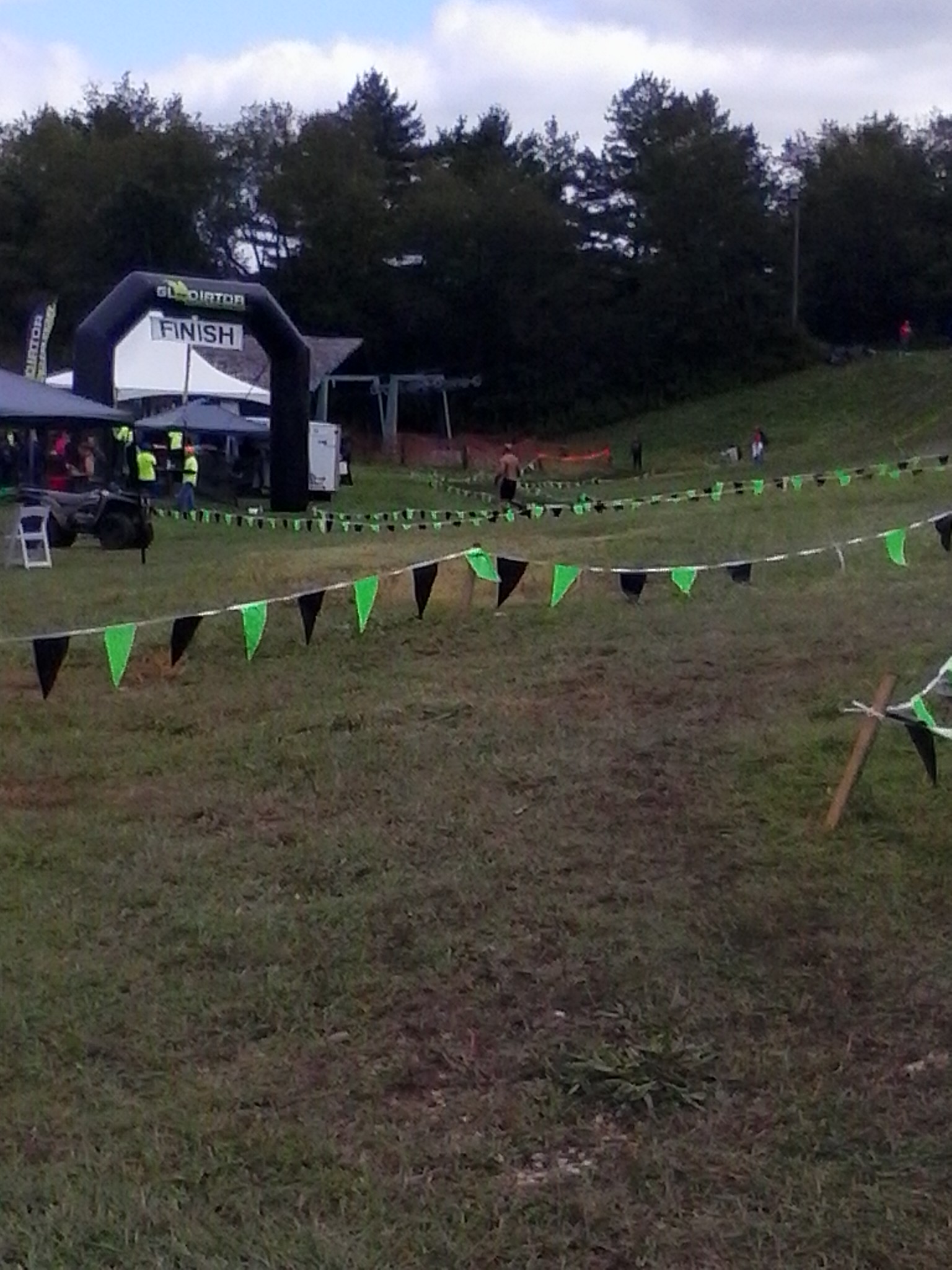
Contrary to most races that start you on low ground, at this one you have to climb a ski hill just to get to the start line. Safety briefing, countdown, and we were off.

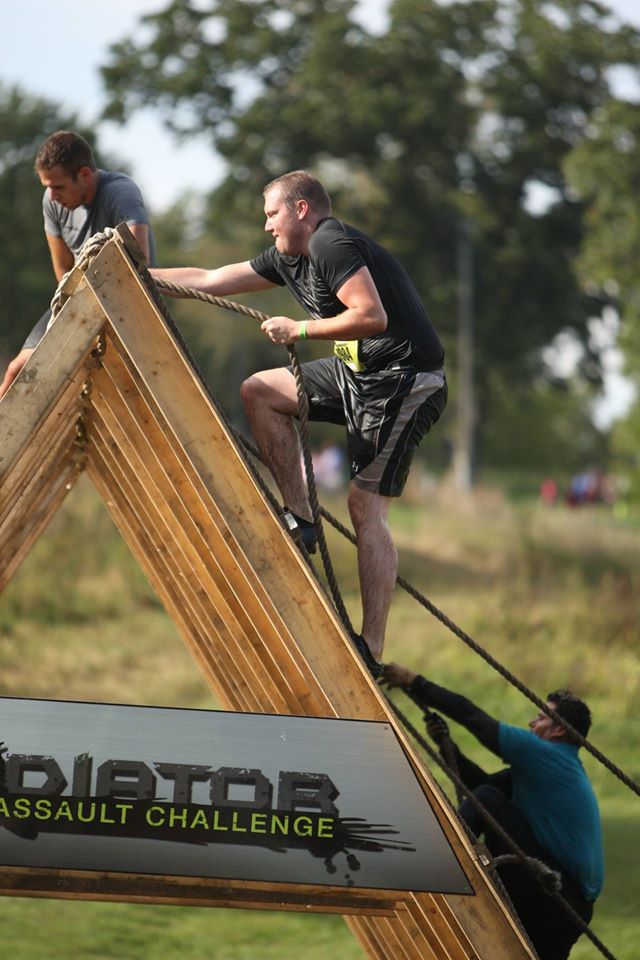
Rocky downhills, mud pits, and hit the first real obstacle, a steep incline wall with ropes. We both got over with no trouble.

GAC

Next were some unbelievably slimey nasty mud pits to go through, chest deep in slop clinging to a guide rope. Single track trails through the woods then through a hip-deep bog. Many of us had to assist others and be assisted just to stay upright getting through it.

Next was a water obstacle that I had not seen before, a chain-link fence laid flat over a trench of water. Lie on your back and pull yourself through the water by the fence that is an inch from your face.

There were several vertical cargo nets along the course, old hat to me but scary to some of the newer racers. I made it a point to hold the net for others and give what advice I could to help the newbies along.

More slick bog mud pits with guide ropes. I saw several people unable to get out of the muck (It really is like quicksand.) and moved ahead to help push/pull people out. Several of us were able to get it organized and get everyone through. I love seeing the magic of teamless teamwork take hold in new racers.

Next the balance beam logs that I happily butt-scooted across, and the fork that divided the 5k course from the full 7.2 mile course.

“Moment of truth.”

“I can do the full course.”

“Hell yeah!!”

Next was a covered low crawl through water. As I approached another racer who had stopped there gave a “How ya doin'” and I smiled and replied, “Cold, wet and nasty, it’s a good day.” and jumped into the water. It was an interesting crawl, water very close to the supports overhead, in places I had to turn my head sideways to keep my nose above water and blind turns that almost caused me to panic.

As we regrouped after this obstacle, the man who had greeted me at the entrance told me that he had been near a panic attack over this obstacle, just too far outside his experience to deal with cold, wet, and claustrophobic all at once. Seeing us attack it with a smile was what helped him break through and beat it. You never know who you might be having an impact on.

Monkey bars next. I knew my grip was not strong enough, so I just jumped in the water below and walked across. Next time, but not there yet.

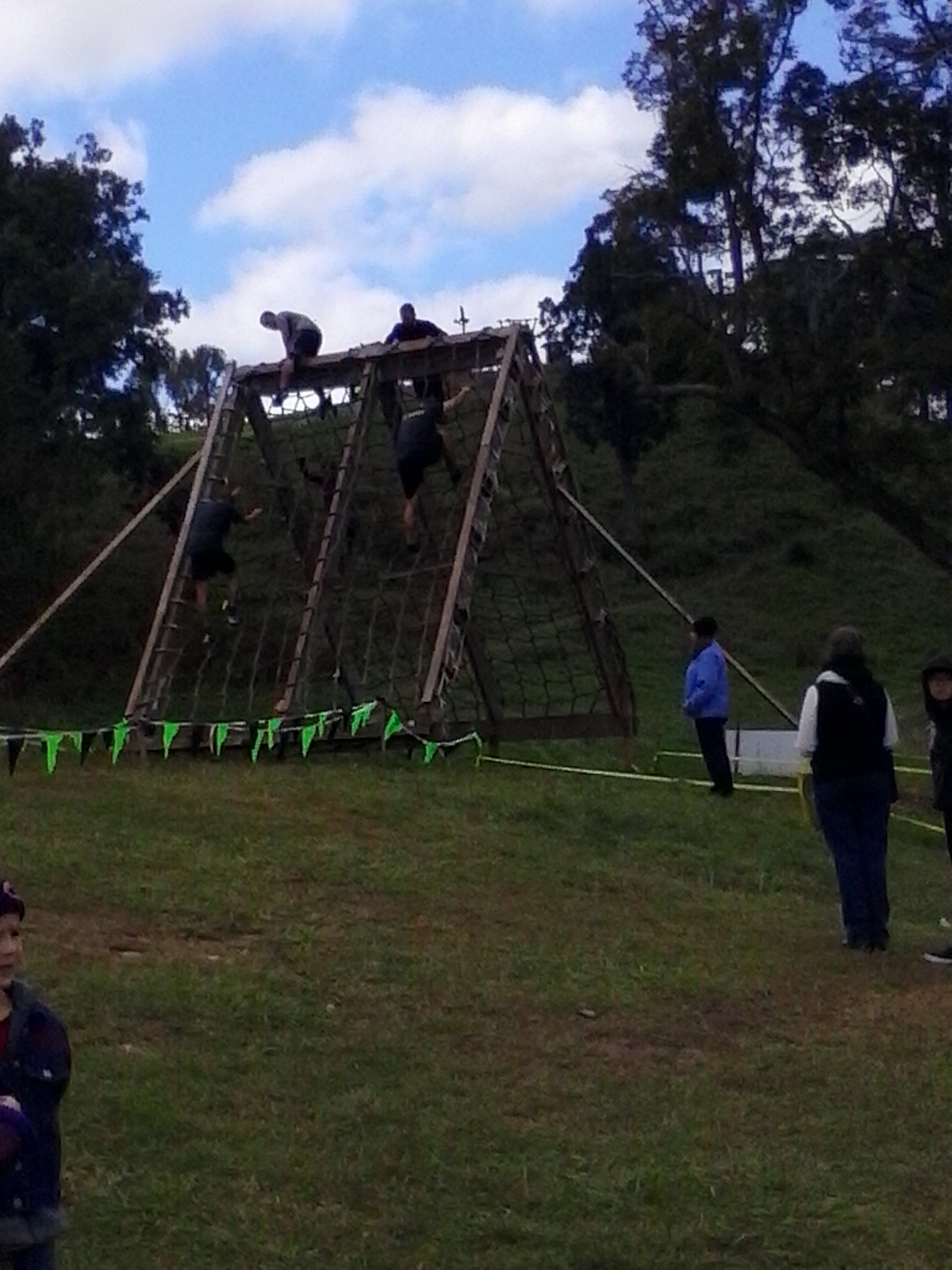
Triangular cargo nets, more mud pits, hills steep enough that they had ropes to help us climb them. One hill with a hose and a slip-n-slide to make climbing it more fun. Down a rocky, technical slope that a firehose had made into a small waterfall.

The walk-the-plank obstacle is one that I have always skipped before. I can swim when I control how I enter the water, but have less confidence when jumping in. This time I decided to do it. While my mind did have a serious moment of “WTF ARE YOU DOING?” I went over the edge without hesitation. I was hacking a bit when the diver in the water checked on me, but I was able to make it back to shore without assistance.

Next some black plastic tubes to crawl through with uncomfortably high water at the low end (go feet first) and two walls to go over. A spectator noticed me helping the two ladies in front of me over, and called out “Let’s see you do it now!”

I backed up, took a running start, cleared it, gave him an AROO, and was on my way. Barbed wire crawl, one more cargo net…

2014-09-13 11.56.33

Regroup and charge the finish line.

2014-09-13 11.56.43

Course officials congratulated us on winning a medal, a banana, and a beer, and pointed us toward the fire pits that all the finishers were huddled around, steam rising from our clothes, trying to get warm.

GAC2

It was a great race, awesome to help bring new racers into the sport, and this race will see me again.

Note: I found a gopro of the course that gives a better feel for the course than my command of the English language can do, so I have linked to it here:

Fear, Hope, and an OCR Hipster: Thoughts on the future of obstacle racing

I will never forget my first race. The butterflies in the stomach, the rush at the starting gun. The cold, wet, nasty grueling experience that caused total strangers to work together, and even to help those who we knew could not help us in return. The joy at crossing the finish line, and the limp that I went home with. And that plain pewter medal, still with mud on it, that still hangs on my wall. It was the start of an incredible journey, and I loved every second of it.

Since then, there has been a continuous debate on what needed to change to make this into a “real” sport. I never knew how many of the poorer qualities of a traditional sport we would pick up along the way. We now have big-money purses, professional sponsored athletes. We also have new racers that now think they don’t deserve to be on the same course as the elites, and an emerging elitist jock mentality that looks down on newer racers. We also have voices becoming more common demanding that the harder events be made easier, because, “OCR shouldn’t be an endurance event.” Arguments over what event determines “The Best in the World” as if such a thing exists.

For quite some time, I have looked at every “improvement” being made in the course of making my beloved sport “real” and thought the old way was better. I heard the following jokes and had a sudden realization.

Both jokes start with “How many hipsters does it take to change a lightbulb?”

Answer one: Only one, but the rest will instantly start debating how the old lightbulb was better.

Answer two: Some odd obscure number that you probably have never heard of.

I have somehow become the hipster of the OCR world. It was better how it was done “before it was cool” and the events that I love the best will almost always be the ones that are farthest from mainstream, things that I have to explain what it is.

The OCR world will get what it asked for, but not necessarily what they wanted. OCR will become a mainstream sport, not by shifting the masses out of the mainstream, but by shifting themselves into the mainstream. They will lose the soul of the event that brought us in, but they will be standard, uniform, official.

This could easily turn into me muttering into my drink over what could have been, if it were not for one thing that the birth of OCR has given me and all the other crazy mud warriors who think along similar lines: We know now that we are not alone. And in that is hope that the crazy, tough, knock-you-to-your-knees events that we love so much will continue.

We started with Spartan, Tough Mudder and Warrior Dash, but we found that edge of tougher, more grueling events, and we knew that was where we needed to go. As the mainstream events are standardized and sanitized, those of us that want more will keep finding more, and building it when we can’t find it.

OCR  may not be going where I had hoped it would. But I am still going there.

Ruck, Race, Shoot: Limit of Advance 2014

When I heard of a new obstacle race that involved rucking and shooting, I was on board immediately. It also helped that they used a photo of me in one of their ads:

LOA used my photo

Long story short, the race was under-received and only a few hundred people attended. Which is a shame, because it really was an awesome event.

Get to the venue, ran into a few friends that I didn’t know were also running, check in and have the rucksack weighed. Note for next time, it is worth it to buy a luggage scale. I weighed mine on a bathroom scale and came out about 15 pounds heavier than I needed to be. With our bibs and T shirts, we received a dog tag marked with a single word, “Quit.”

When we heard the call for last chalk (what in other races would be the open wave) we rucked up and followed the course marshal to the start point. We got there just as the elites were finishing the ruck portion, having to carry an 8′ timber post in addition to their ruck. (I need to run elite next time.) We were given the normal pre-race safety briefing, and we were off, down a gravel road, into the fog.

10556480_772548439475348_5728354538938148124_n

I stayed with the middle of the pack for most of the 7.62K ruck over back roads and through roadside ditches, but was toward the back by the start of the obstacle course. Elites would have to take the ruck through the course, but being an open runner I was allowed to drop mine.

Obstacles started with an 800 meter wire crawl. Putting simulated gunfire over this was a nice touch.

At the end of the crawl, we received another dog tag: “I”.

The next obstacle was appropriately enough called “The Dirty Name”:

Dirty Name

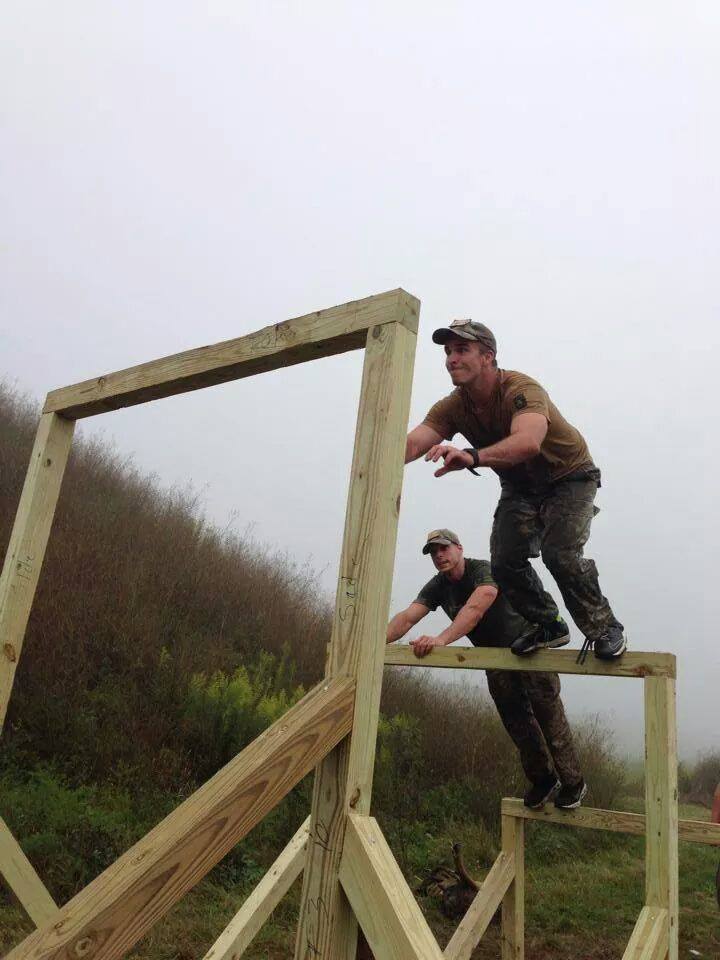
Basically you have to climb onto a 6×6 beam, jump to the next, and repeat the process. I made it onto the middle beam without a problem, but lost my balance before I could attempt the second jump.

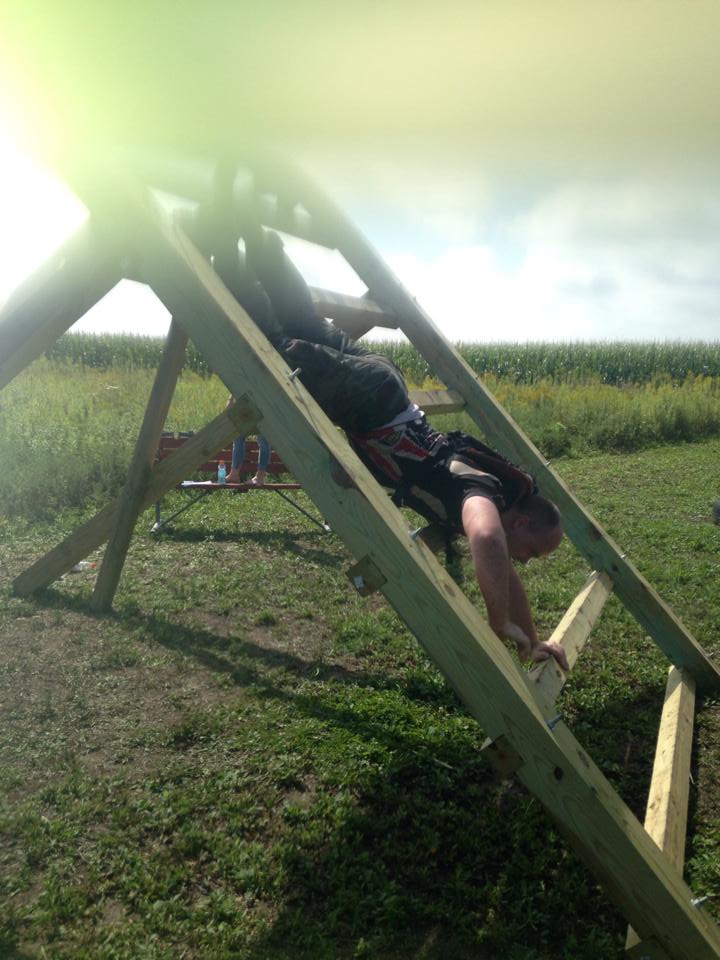
Onward over trails, through a swamp, over a log set at about shoulder height (I was happy to make that one, as I have always sucked at this obstacle before), and came to the reverse ladder. I had some trouble getting over the top rung, and when I finally made it I kept going, head down rather than stopping to turn around. Someone behind me commented that we really NEEDED a picture of this:

1544388_949458865079965_6525978574279080649_n10429218_949458728413312_1986554104724663560_n

Next serious obstacles were the tall walls:

10676160_949457971746721_7447424394905302133_n

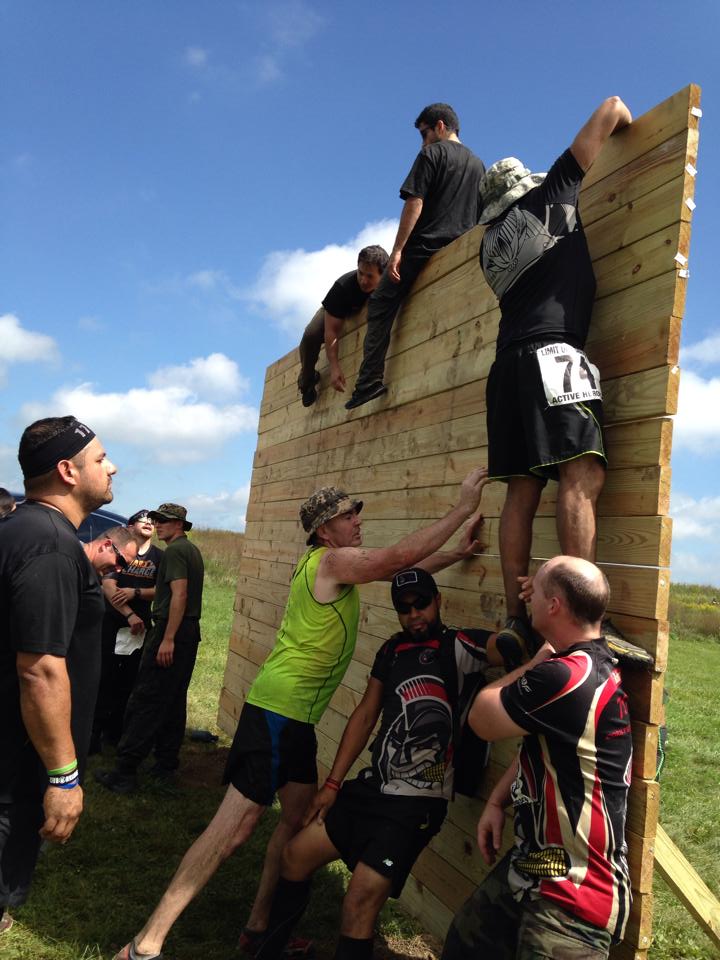
There were four of varying heights, and they had to have been somewhere from 11 to 13 feet. We teamed up got each other over, two people acting as stepping stones and a third pushing from behind.

10613153_949459028413282_5765932956794536617_n

The course marshal at this point told us that he was impressed at the teamwork we showed, and I simply replied, “We’re Cornfed, this is what we do.”

The next obstacle that sticks out in my mind is the confidence climb. It sticks out in my mind because it is one of the obstacles that frightens me, and that I gave up on halfway though at GR Nasty. This time, I made it through. Although I did discover that the very top is not a fun place to have a calf cramp.

10626520_772625286134330_4839151958373912243_n

The rest of the obstacles I do not have pictures for, but there were over-unders, monkey bars (which I failed), and sloped walls that you had to run up, grab the top, and then climb over.

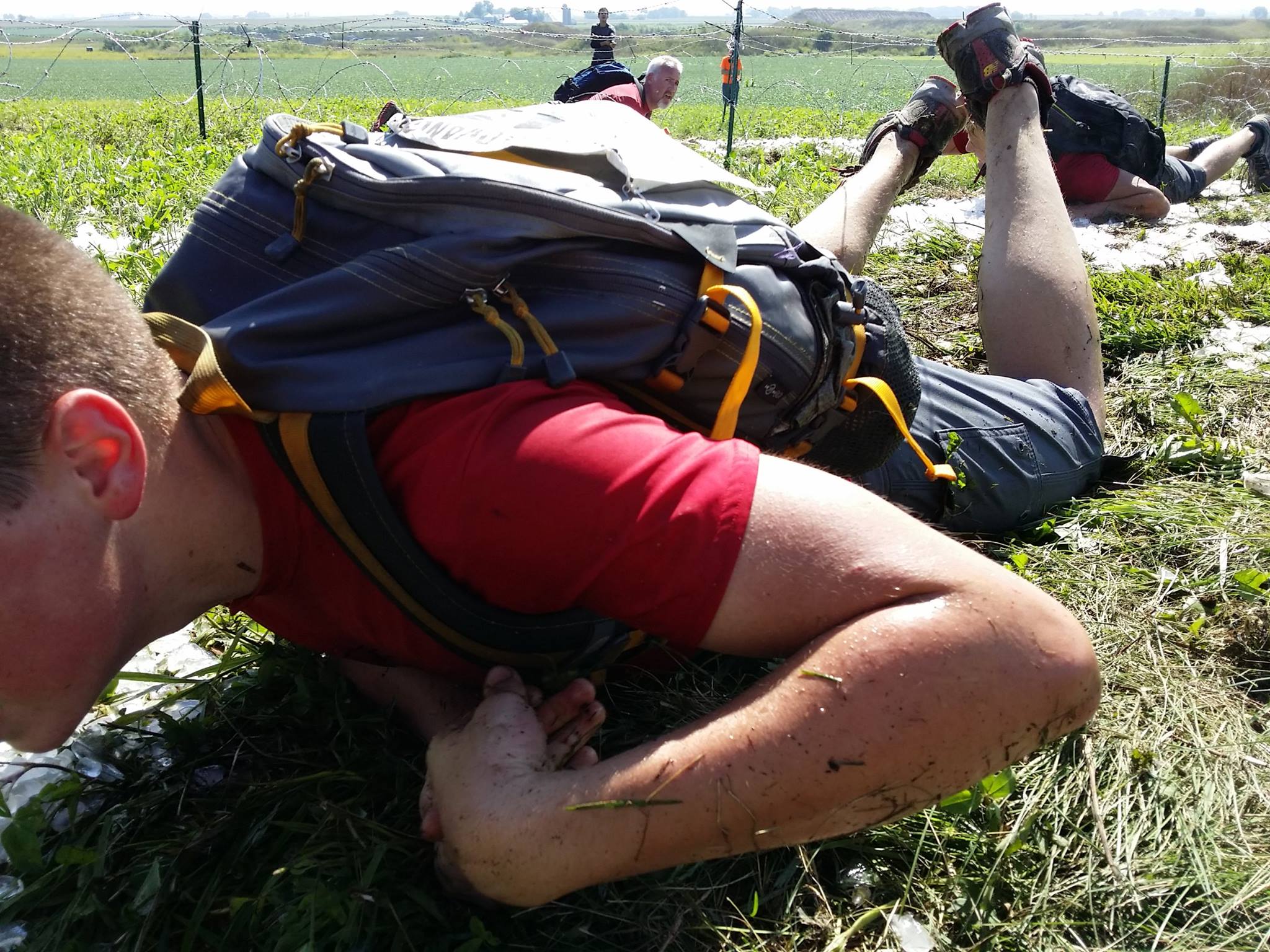
The final obstacle was a barbed wire crawl through ice.

10549957_774907762572749_3254694603778971398_o

Across the finish line, with an added touch that I have never seen before: The race director asking each and every racer what could be done to make it better. THAT was something that I appreciated.

We went on to the shooting portion, 10 rounds at 25 yards with the 1911, and 10 rounds at 100 yards with the AR15. Horrible would be a polite way of describing my shooting, a total of 5 hits for all 20 rounds. Need to get more range time in.

After leaving the rifle range, we received our final dog tag:

10644886_10204297546066061_934001749183374266_n

I can’t wait to see what is in store for the next one. And yes, I will run it elite, just to see what they have in store.

Seeking Balance: Reply to THE 6 MOST SHOCKINGLY IRRESPONSIBLE “FITSPIRATION” PHOTOS

A friend posted this article (http://reembody.me/2013/09/10/the-6-most-shockingly-irresponsible-fitspiration-photos/) and I felt the need to respond, as there are great points to most of the memes being thrown out as the worst of the worst. I may have even used some of them in past blog posts.

I am not inserting all the photos, check them out and then read here.

First, let’s start out with the author’s cover photo: You are stronger than you think you are. Meaning you can do more than you think you can if you stop letting your mind get in the way. Remember that as we discuss.

#1- The idea of getting angry when you are tired to allow you to push harder is crap because you might overdo it and get hurt. So you should stay inside your preconceived limits and not ever push harder. I particularly loved this line:

“Pushing your body’s limits just because you want bigger biceps is sort of like setting your house on fire because you’re cold.”

Sorry, pal. I don’t want bigger biceps. I want new limits. And getting angry at where I am can be a powerful force in the right direction, provided it is not overused.

#2- this one I agree on. Moving on.

#3- We should not ever confuse dedication with obsession, and if you are being called obsessed, you are obsessed.

Sorry to break it to you, but anyone who is even marginally dedicated to something that lazy people refuse to go after WILL be called obsessed. Dedicated people won’t call you obsessed, they will generally pull you aside and explain that they think you are overtraining and you might make better gains with more food and more rest.

#4- You must never ever have any bad response to what you are doing to your body.

While I will agree that throwing up is a sign of something wrong, throwing in the towel is not always the correct response. There may come a day when you have to complete the task at hand sick, injured, weakened from loss of blood, who knows. Because the world is a rough place and bad things happen. While anything can be taken too far, and pushing that hard EVERY day is not a wise choice, every so often pushing past your limits is needed if you are going to expand your limits.

#5- The fact that they used thin girls with muscle tone invalidates the idea of strong being more important than skinny.

You must consider the target audience to understand the imagery being used. If your target audience is a girl trying to be “skinny” and thinking that lifting will “make her look like a man,” then you want to use models that both fit the skinny-sexy model and have some visible strength. The key is to give them something within the realm that they know, but also lead them in a more strength-based direction. Using the powerlifter (while she is badass and I applaud her) is too far out of the realm of the target audience.

#6- If your mind or body says stop, you need to stop right then.

Going back to the cover photo, if you stop when your mind stops, how can you be stronger than you think you are?

We all have a tendency to stop when we are uncomfortable. We want to stay safe and not go too far. But that means that we will never see what we are truly capable of. Again, this can be taken too far, but what is too far is open to debate.

I will end by telling of a training demonstration used by several police departments, and one that the author doubtless would be truly appalled by.

“Your body contains about 1-1/2 gallons of blood. You can lose roughly a third of that before you lose hydraulics and pass out. Take a half-gallon jug of strawberry milk, dump it out and see how big of a puddle it makes. Quite a big puddle. If you have not made a puddle that big, it is not your body giving out, it is your will.”

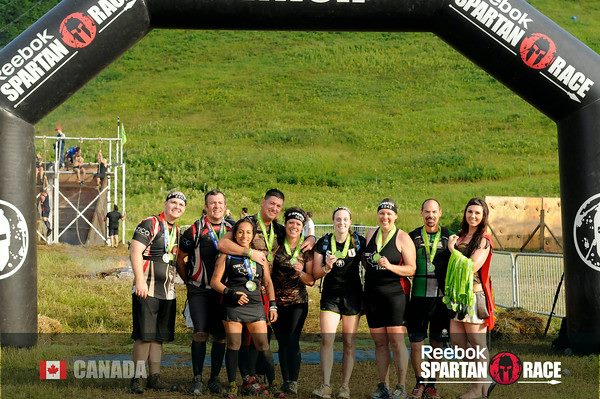
Back to Back: Ottawa Spartan Super and Beast 2014

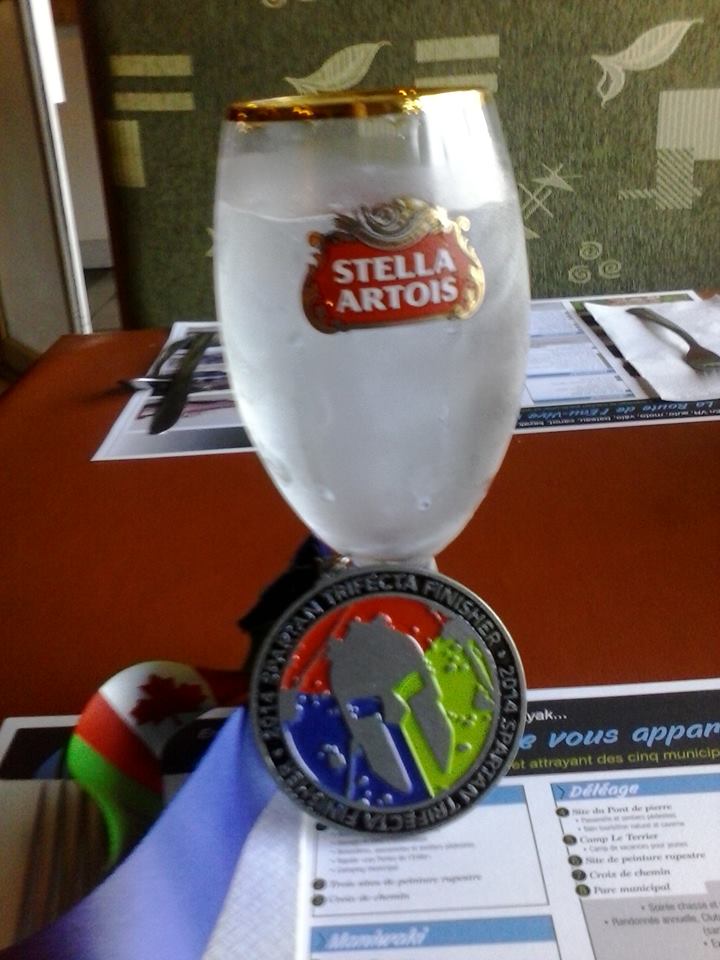
After competing my first Trifecta last year at Mont St. Marie, I knew I wanted another match against the mountain. I got it in my head to do a Canadian Trifecta this year, and Spartan decided to put the Super and Beast on consecutive days, awesome training for the UB.

Note: I did not get to writing this post as soon after the event as I usually do, so the points made here will be those that stick out in my mind as I look back on it.

Day 1

10384930_494661784010626_1677229652208038210_n

The start of the race was typical: rough trails that seemed always to be headed uphill, wall clearing, back down the hill to the rope climb (which I failed) and back up the hill, crossing the barbed wire crawl halfway up.

O314BW00900-XL

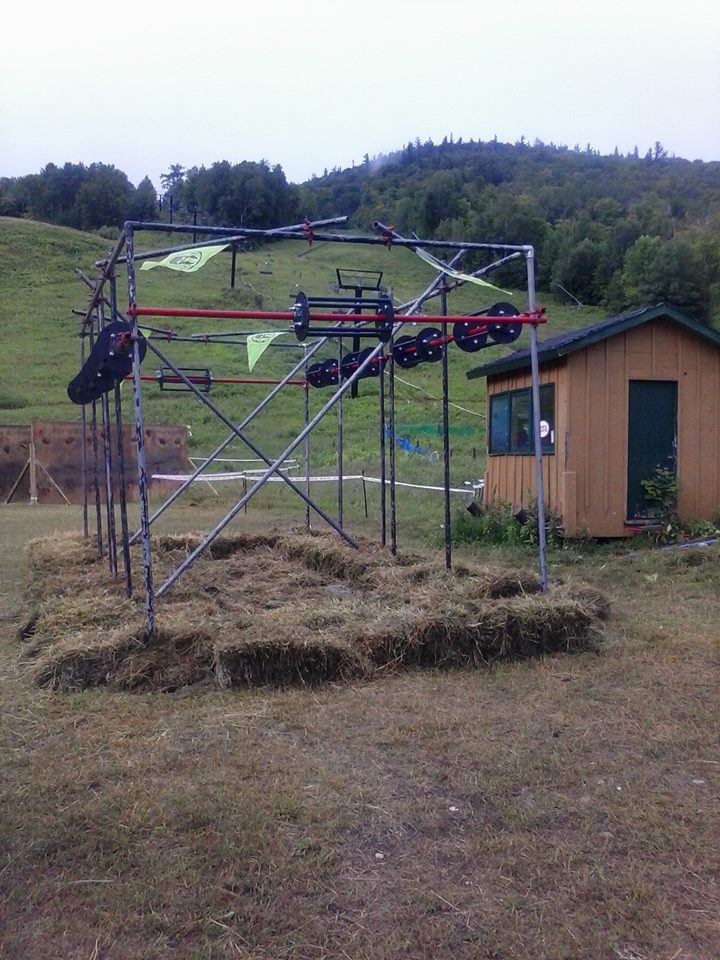
At the top of the hill was the 8′ wall, which I completed unassisted (although the course marshall did call me out for “Moderate use of the red blocks”). Back down to the Hoist and something I had never seen before:

10565101_723097571076961_588377110894801877_n

A turning monkey-bar contraption that you had to turn for 10 bars or do burpees. I cut a deal for 2 bars and 24 burpees. Whoever designed this contraption is truly an evil genius.

Back up the hill. Again. What is it with this “up” stuff?

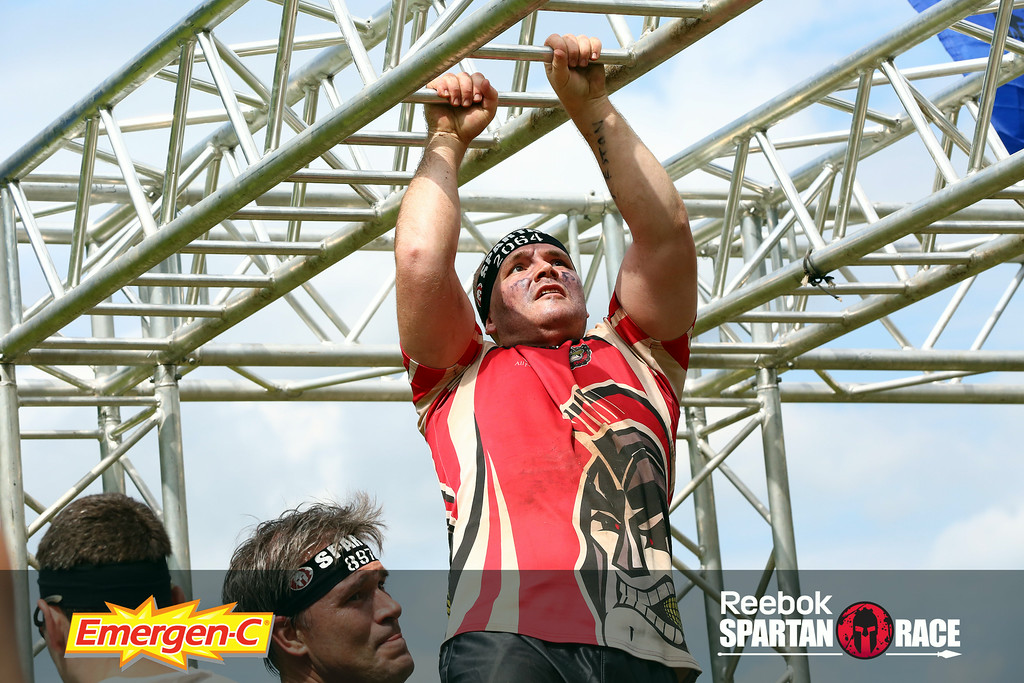
At the top of the hills were the monkey bars, which I was able to get a fellow racer to spot me through.

0W2A9104-XL

Onward through steep trails, stopping in to check on those who had not brought food or water with them and were starting to flag. I commented to one of them, as I shared my M&Ms, that this is about the only place where you can take candy from strangers.

At one of the walls, a pair of ladies were unable to get over and the course marshal was sending them to the side to do burpees. I ran up and helped them over, one of them inadvertently kicking me in the head as she went to get a leg over. She was mortified, but I was laughing about it.

Mountain races have the ability to take a lot out of you, and I am no exception to this point. I made it over the reverse wall on my second attempt, looked forward, and saw the jerry can carry sending us back up the mountain, and stammered out, “Are you F***ing Sh**ing me??!!”

I took a moment, drank, ate, shared with those behind me who were having the same reaction, then STFU’d and went after the jerry cans, Nasty carry, had to stop four or five times on the way up, but was able to do the downhill in one shot.

A couple more obstacles, running some creek bottoms, and suddenly coming out of the brush to see the end:

O314SR02460-XLO314FJ02464-XL

Back to the hotel to rest up and fuel up. Super complete.

1907786_723097581076960_3748774534154524459_n

Day 2

The first day I had run ahead of my teammates, assuming they would catch up. Day 2 it was agreed that we would move through as a team, regrouping every obstacle to make sure everyone was taken care of. At times it would split into two teams, but we had enough people to make sure everyone got through.

We had been told that the Beast course was the same as the super course, with a flat 5k added on to the end. As lies go, there are lies, there are damned lies, and then there is everything we would be told about this course.

The first half was indeed the same as the day before, except for the bonus of teammates at hand. The spinning monkey-bar thing is much easier when teammates are holding you up.

The course changing was almost unnoticed until someone pointed out that we had not gone as much straight uphill the day before. That was a brutal climb, 2 miles of nearly straight up, ending in the atlas carry.

We regrouped at the water station after the atlas carry, and were told you have 10K left to go, that was your last uphill, and there is another water station 2k down the hill. In truth, the water station was 5k, several serious uphills and several obstacles away, and we had much further left to go.

The second half of that race had some interesting touches. Low crawls under barbed wire, in a stream about 3 feet deep. Tractor pull through the edge of a pond. (Also awesome that we hit that just as the rain did.)

We all hit a point of this is stupid, this is STUPID stupid, this is not fun anymore, why the hell are we doing this. I encouraged my teammates (and myself) along by saying that if things are still fun, you are not growing. You have to push through when it is really not fun anymore if you want to become tougher.

We got to the Rig, the signature Canadian obstacle, and decided that we were not, under any circumstances, doing burpees here. We would put one teammate on the others shoulders and carry them through the obstacle, with them just touching the bars/rings/ropes that we were supposed to be hanging from. Ring the bell at the end, put them down, do it again for the next. Screw burpees.

The first half of the team reached the end. Two of us helped a teammate with an injured wrist up the slick wall…

O414SR04111-XL

And onward to glory!

O414FJ03916-XLO414FI00814-XL

We waited for the second half of the team, and we saw them when they reached the spear throw. I ran back to encourage them, and one of them mentioned she was unsure about making it up the slick wall, so I jumped back in to run the last stretch home with them, donating burpees to their penalties, and getting some odd looks of “You have the finisher’s medal, why are you back here again?”

O414SR04186-XL10592763_10152323188092153_3903645616503650802_n

My first double Trifecta, and my first Canadian Trifecta. And while I it’s debatable if I “won” my rematch against the mountain, I pushed harder than I was capable of last year, harder than I thought I could push now.A huge win in my book.

10557401_723097601076958_7323970329956102244_n

Redefining Possible: GRC 1127 and GRL 396

10403329_10154441768085494_3962078099040221804_n

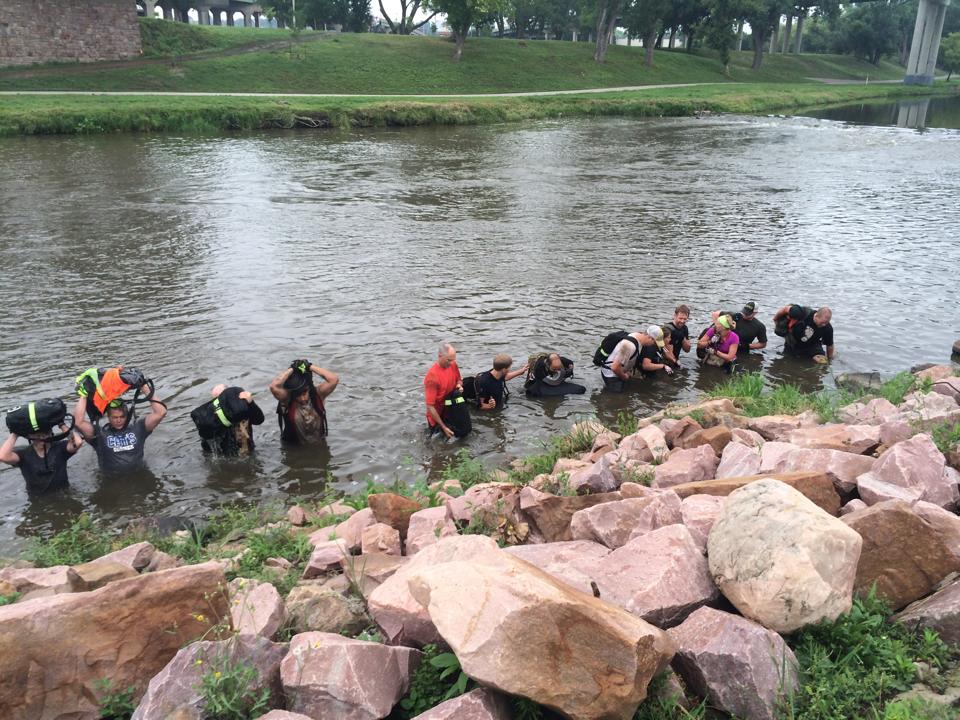
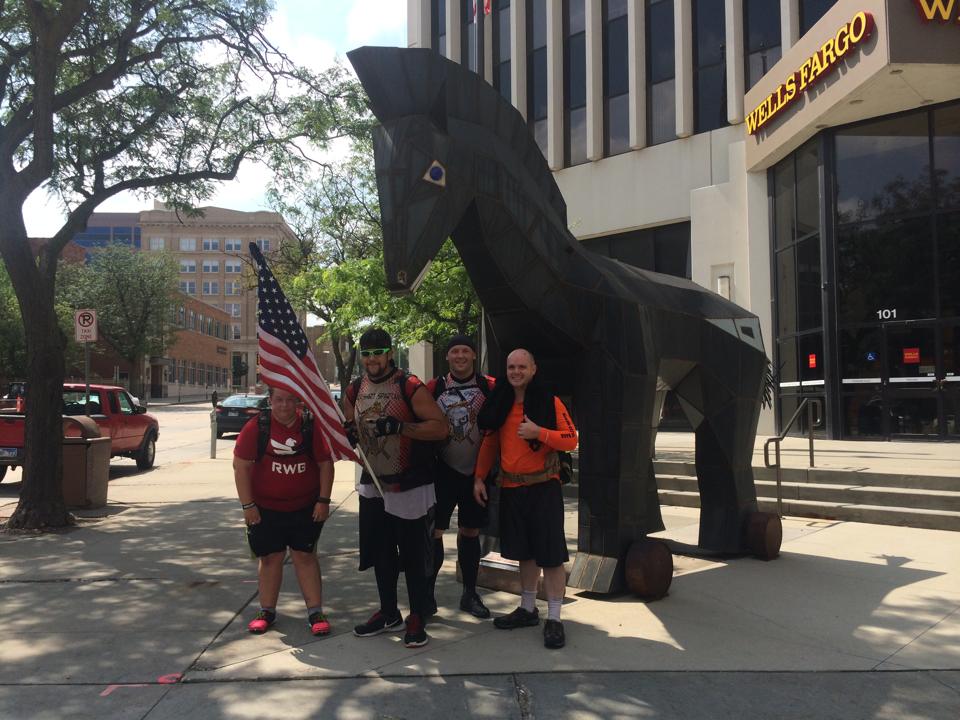
In my ongoing training for the Ultra Beast, I have pushed myself to find tough events to test out my gear, my physical abilities, and my mental game beyond where I push myself in training. I had to cancel out of a 50K trail race, and found out that there would be a GORUCK Challenge and Light in Sioux Falls (my girlfriend’s hometown) and got a few of my teammates from the Blackshirt Spartans to sign up with me. Looking for a way to push harder, this seemed like the ticket. I had no idea how right that would be, how hard we would push, or how much more than we thought possible we would do.

Found the start point, met our Cadre (Cadre Rick), and started the welcome party. I was called up to demonstrate the Tunnel of Love and the 1-man buddy carry. Buddy carries, rushing drills, failing entirely at the dreaded Inchworm Pushup, then having to bear-crawl and crab-walk around the park.
10417694_10154441772550494_1518417825521316206_n

We then had all of our food taken from us. (Word to the wise, ALWAYS have gatorade in your hydration pack. You will need the sugar.) We then moved out following Cadre, until we reached our first assignment.

We were given a time hack to have one team fill a sandbag while the other recovered a piece of information from a nearby landmark. We made the time hack, and moved off team-carrying the sandbag, heading for the battleship memorial.

We soon figured out getting people on the sandbag and switching them out on the move. At one point we had to be told of our remaining time/remaining distance by Cadre, indicating we needed to step it up, but overall the movement went very well. At several points we went through crowds outside bars, and I’ve got to hand it to Sioux Falls, this is the first city where I have ever gotten cheers.

We made it to our objective with 3 minutes to spare and were given time to eat, rest and take on water. During this time, Cadre asked us a number of historical trivia questions that would help us on our next movement. We got exactly one right.

When Cadre gave us the next objective and the time hack, several of the locals, who knew where we were going, responded with, “No way. We can’t do that!” We were then told that we could not use our pack straps, pack top handles, or the handles on the sandbag. Our one correct answer had earned us one ruck that could be put on.

We agreed that the flag bearer should get to wear the ruck, we were able to divide up everything that needed carried (with great difficulty) and we were off, but not nearly at the pace we needed. Cadre encouraged the team leader to get us better organized, and we started to pick up the pace. After awhile the man carrying the sandbag (around 90 pounds) started faltering, and I took it from him and handed off my ruck. I was impressed with how well I was able to carry the load, but I still started faltering before too long. By this time we had entered a residential area and were told no talking, hand signals only, so I couldn’t get anyone’s attention to switch out the weight, so I struggled on with it as well as I could. Schmitty came up next to me and gave an inquisitive thumbs up. I did my best to improvise a signal for “I’m freaking dying,” and he took the sandbag and gave me his ruck.

Speaking in whispers, Cadre gave us additional historical questions to earn back more ruck straps. The first few went to people struggling with two rucks. When no one volunteered for the next one, several of us nominated Schmitty, and the next one I jumped on.

I then caused us a little trouble. A female GRT behind me asked if someone could take her ruck, I turned and took it, but this caused some confusion in the lines and caused us to break formation. Cadre stopped the line, and explained to us that while my intentions of helping a teammate were good, I failed to communicate this with the rest of the team, and that little communication points like this will save your team’s ass. I appreciated this and several other points like this where he was willing to stop the movement, not to punish us for mistakes, but to teach us how we could do it better.

Just before daylight, I was named team lead and given a task that I thought impossible. Cadre selected a railroad tie that was something near 12×16″ and roughly 14′ long. I went to lift the end of it to see how heavy it was, and I couldn’t budge it on my own. Cadre asked what I thought, and I told him flatly that I didn’t think the team had enough left in them. He simply replied, “Yes, you do.”
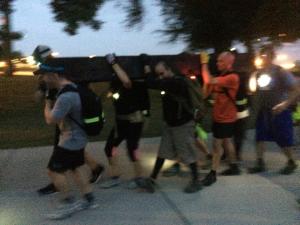
10362586_10204082478884082_8518834356302803294_n

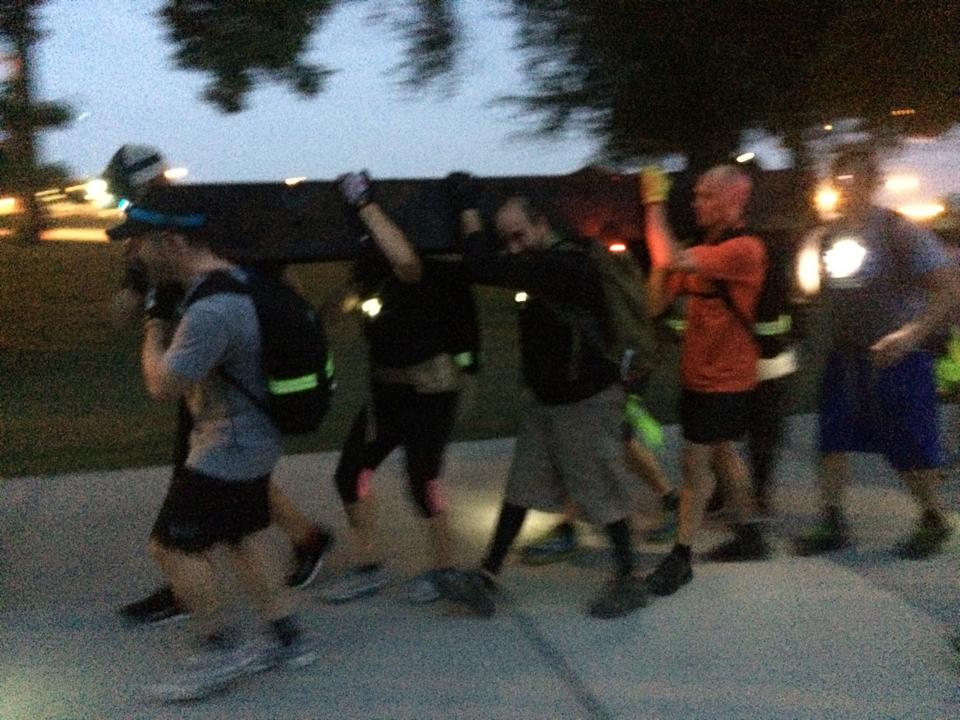
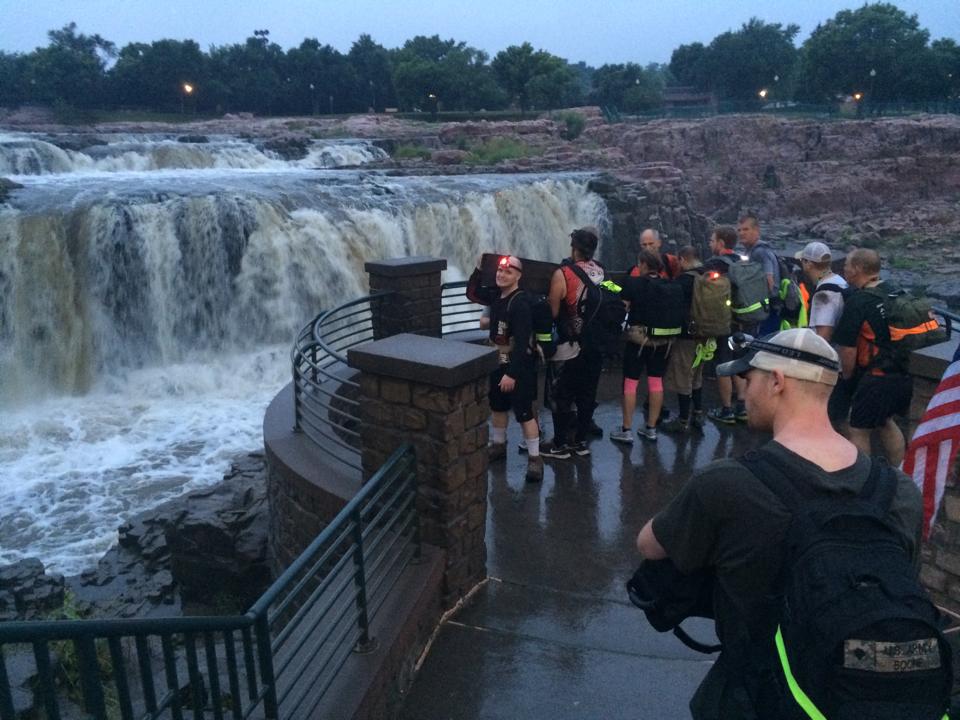
That was the most brutal carry I have ever done. The first few minutes, my leadership was an absolute mess, but then I started figuring it out, ordering the team weight to be handed off to put someone new under the log, putting a weaker person as flag bearer to give us more muscle to work with, getting under it myself when someone needed out. When I was under the log, I couldn’t look around, so I told the flag bearer to be our eyes and direct us. We carried it in and out of several of the lookout points overlooking the falls.
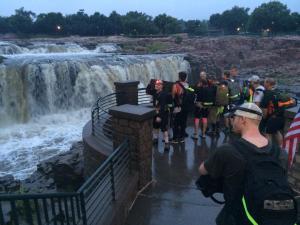
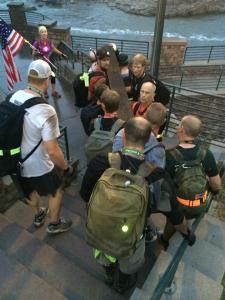
10377989_10204082472803930_6781508100489886525_n1896903_10204082476084012_8786390016631333238_n

We hit a point where unit cohesion was breaking down, we were dangerously close to losing control of the log, and several people told me later that they were close to walking away. I didn’t know what else to do, so I called out to Cadre, told him we couldn’t hydrate with so many of us needed under the log, and asked permission to take a break. He pointed to where he wanted the log, and we were given a short time to recover before getting it back up and taking it back where we had gotten it.

The last movement was getting back to our start point with two people designated as wounded, so we had two people carrying the wounded, and two (including me) carrying the wounded’s rucks in addition to their own. We would move about a block or two at a time, then switch out people under the wounded. At some point someone asked if they should take the extra ruck to put me in rotation under the wounded, and I replied that I didn’t think I could carry that far at a time. A few minutes later, we hit the inevitable point where the call goes up for a new carrier and no one steps up, so I handed off the ruck and picked up the wounded. I was able to go the required distance and traded off every other stop for the rest of the movement.

When we reached our destination, we were ordered into the water.

10570469_10204082468763829_2705422928436791706_n

We did an unknown number of thrusters, and then were announced mission complete. A few hours to rest up and patch up, then back for the Light.
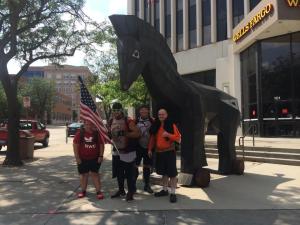
10419988_10204082705089737_3401199365508528068_n

The light was very unusual, in that there were only four of us. The official rule is that there need to be five or the event will be cancelled, but Cadre offered for it to go ahead and we jumped on it. Welcome party similar to the night before, heading out on the Greenway trails, and again being given a sandbag carry. We struggled on with it as a 4-person carry, but it wasn’t really working with no one to trade out with, all of us on the carry. Eventually Schmitty gave me his ruck, threw the sandbag on his shoulders, and drove on. We absolutely annihilated our time hack, and were rewarded with being able to empty the sandbag.

Next challenge: One of the team is wounded in one leg, they can be carried or can hop on one foot, but if the left foot touches the ground there will be a penalty in flutter kicks. Each minute over the time hack will incur a penalty in flutter kicks.

I was chosen as wounded, and got to learn exactly how much being carried over someone’s shoulders sucks. We tried several different methods and benefited from several bets with the Cadre that if we stopped for flutter kicks or sang to a local I could walk a specified distance. We reached our objective more than 300 flutter kicks late and were given a reduced penalty.

We moved on with basic movement drills, and were given our final mission with me as team lead: You have 10 minutes to reach the top of a specified parking garage for helicopter extract. If you miss the chopper, you will be assigned one wounded and will have to make it the rest of the way out on foot. And you have just been ambushed so badly that you all lose your shoes.

I put Will, who knew the location, as flag bearer to show the way and we moved out. All seemed to be going well until I nudged one member of the team to move a little faster, and that pushed her past her mental limits. She started yelling that she wanted to quit, that I was being a jerk for telling her to go faster, pretty normal spaz out when we have hit our limit.

Between Cadre and the three teammates we were able to encourage her on, knowing we had missed the time hack and would have to carry her out of here, but better that than letting her quit when we had to be near the end.

As we approached the top level, Cadre made a comment of ,”Let’s go see if the helicopter is still here…”

“GORUCK Light Class 396, you are Mission Complete. The helicopter was always here. You just needed to make it here.”

It was an unusual end to an event, as two of us were tending to the blisters on our teammate’s feet, arranging who to send for a car to get her back to the start point, and Cadre giving us a short AAR on what could have been done better, that she needed to be more honest about what she needs to keep going, and that I as team leader need to be able to tell when I am dealing with pride putting a brave face over pain, and be able to work around it without making anyone feel that they aren’t doing their share.

I learned a lot at this event, and it is one of the few events in my history, while I performed far from perfectly, I think I did well.

We did what we thought was impossible.

Not yet, not ready quite yet, but HEAVY, I am coming for you…
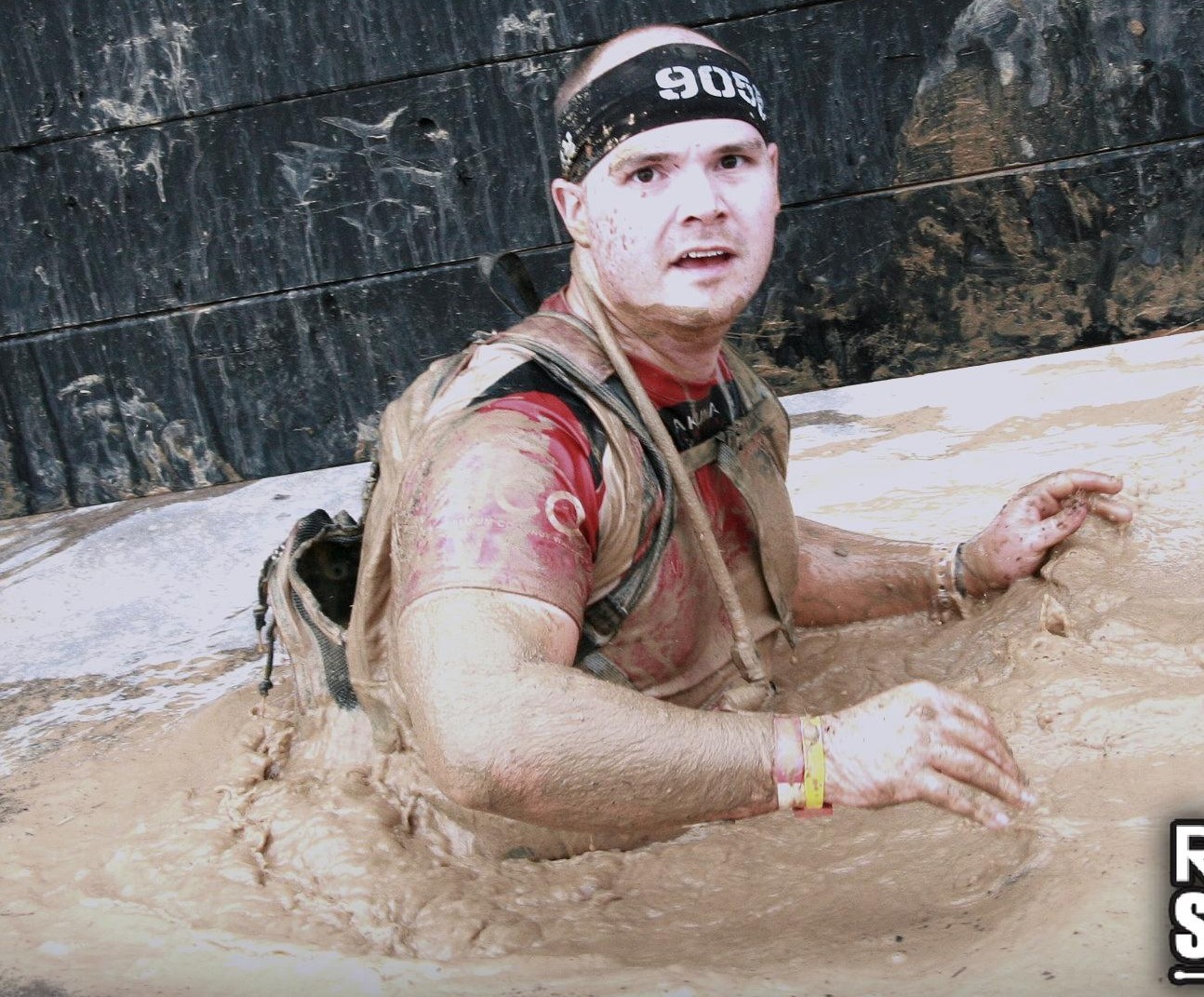
Unworthy of the Name: A Discussion of Athletic Elitism

It is all too common for athletes who have trained hard and reached elite levels to feel a disconnect with those who have not achieved the same level.

Some, among them many of the greats, remain connected and encourage others to keep pushing their limits, even if those limits seem paltry.

Sometimes this disconnect grows into a swollen ego, and that is where problems with being considered an athletic snob come into play. There is one particularly annoying aspect of this that has been cropping up lately: The idea of “Anyone who is not near my athletic level has no right to call themselves (insert whatever title I want just for me).”

The New York Times carried this article (http://www.nytimes.com/2009/10/23/sports/23marathon.html?pagewanted=all&_r=0a) asking if slower runners have the right to call themselves “marathoners”. They have “lowered the bar” and “ruined the marathon’s mystique,” and if you didn’t finish in a certain time, then you didn’t “really” run it. You were merely a “participant.”

What is that magic time that is worthy of the name? Typically just a bit slower than the finishing time of the person who wishes to label someone a “participant.”

T Nation published a rather poorly-thought out article dealing with who can and cannot call themselves “athletes”. (http://www.t-nation.com/training/crossfitters-arent-athletes) It claims that the requirements to earn this title are to participate in a sport that has a large fanbase (while deriding Olympic events that it would appear are no longer “sports”) and you have to find yourself on the winner’s podium fairly often. You must also derive a large portion of your annual income from your sport.

What are you if you finish every event but don’t place in the top three?

You are then a “Recreational Non-Athlete” (Really?) or a “Competitor”.

Okay, now that we have put the snobbery out in the open, Let’s look at real definitions.

Marathoner, noun. Someone who participates in long-distance races (especially in marathons).

If you finished a marathon before they took down the finish line, then congratulations, you ARE a marathoner.

Athlete, noun. A person who is skilled or competent in sports and other forms of physical exercise.

Skilled or competent. Not the best in the world. Not making a living off of it. Just competent, able to complete the task at hand. So the DFL race finisher is still an athlete.

Sports and other forms of physical exercise. So the Yogis, the bodybuilders, the obstacle racers and the Crossfitters are athletes too.

Journey to make sense of

Why is this important?

Because our sports push us to make ourselves better, stronger, tougher. We complete the same event as all of those who finish before and after us. We become better human beings. And calling us “recreational non-athletes” or “participants” (the sports world equivalent of telling us to sit in the corner and color) can hold people back from reaching their true potential. While being recognised for our accomplishments, to have the title of Athlete placed on us before we would ever think of saying it ourselves, helps push us on to greater heights.

“But everyone having the title makes it worthless!”

First off, not everyone has the title. Finisher’s medals are not “participant ribbons”, they mark that you finished and did not falter halfway through a tough challenge. Less than 1% of the US population will ever run a marathon, even with us slowpokes in the back. If being in the top 1% is meaningless to you, I really don’t know what to say to you.

Secondly, if you truly are so great, so elite, so badass to have earned the right to decide what people can call themselves… You should be tough enough to not let what everyone else calls themselves bother you.