Quarry Pit Punnisher: Vegas Spartan Super 2014

Image

Since I started racing, I have pushed myself through a lot of different sorts of terrain, from pavement to swamps to mountains. When I was invited to run the Spartan Super in Las Vegas, I was excited to add desert to the list.

I had agreed to help a few newer racers through the race, one of whom was just recovering from a respiratory infection, so it was clear from the start that we were going for a finish without regard to time.

We ran a few hundred yards out of the gate, then slowed to a quick walk for most of the course. The terrain was nearly all gravel and sand, always sliding underfoot and getting into everyone’s shoes. At several points we stopped to dump the sand out and retie shoes, only to have them refilled 100 yards later. 

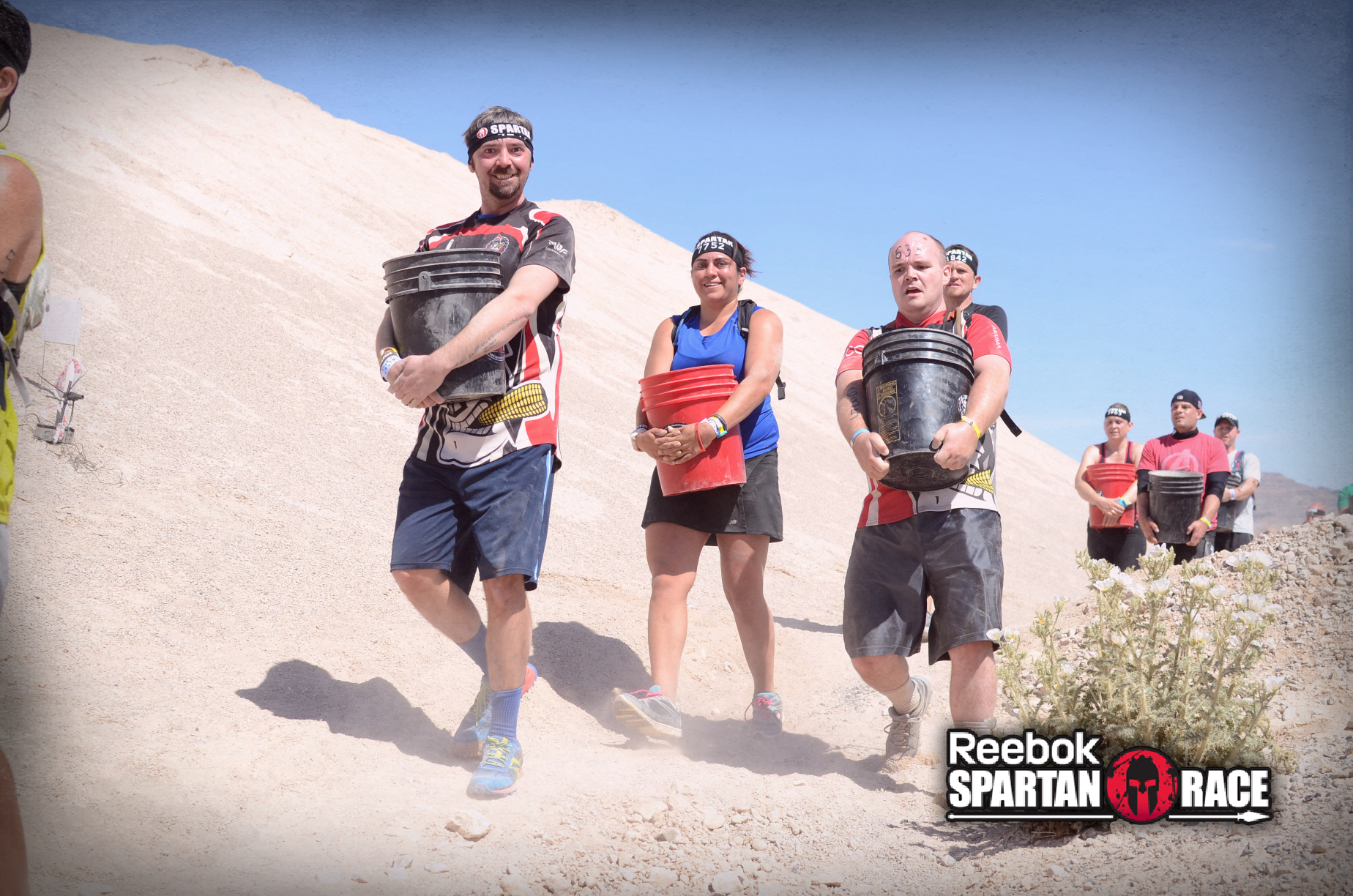
We made good time through the typical beginning obstacles, over under through and short walls, then came to the big gravel hills and the bucket carry. Signs were posted to not carry the bucket on your shoulder (they say for safety reasons, but most of us thought it was just to make it more difficult). This is likely one of the most brutal obstacles, I had to put the bucket down for a moment 4 or 5 times before completing it.

I ran ahead of my battle buddy to knock out the atlas carry, then helped her complete hers. It must of been amusing to watch: I pick up and hand off the weight, run around the edge of the lanes to meet her at the far end, crank out burpees, pick up and hand off the weight again, and run back to the start point.

We caught up with the rest of the team at this obstacle and continued on together. The next item of note was the monkey bars.

She gets up on the bars, puts feet on my shoulders to help her across, we get through and go back to repeat for me. Feet on her shoulders, and she hits the afterburners. I am grabbing bars as fast as I can to keep up, course official is laughing, but I made it.

We each went back and helped one of the team (who I referred to as the Ladies in Blue) across. The last was going to skip the obstacle entirely, saying she couldn’t support her weight long enough for someone to get under. I asked if she could lift one knee enough to put it on my shoulder.

She ends up with me under one leg, someone under the other, and someone supporting from behind, and me yelling, “You got this! Go! Allez allez allez allez!”

The uphill and downhill gravel trudge continued, and I came to understand what dust storms are like. When it gets stirred up, you can’t see ten feet and breathing becomes a chore. The next memory that stands out is getting the team over the inverse wall. 

I cleared the wall and returned to help the rest. We would help push the person up to get a grip on the top of the wall, and if they had trouble from there I would go over the top to help them the rest of the way. I was impressed with myself, I completed the obstacle 5 times in about 10 minutes.

The sandbag carries at this race were tougher than many I have seen at beasts. I started the last one with my bag and my battle buddy’s, but she ended up taking hers back when I was having trouble keeping the load balanced.

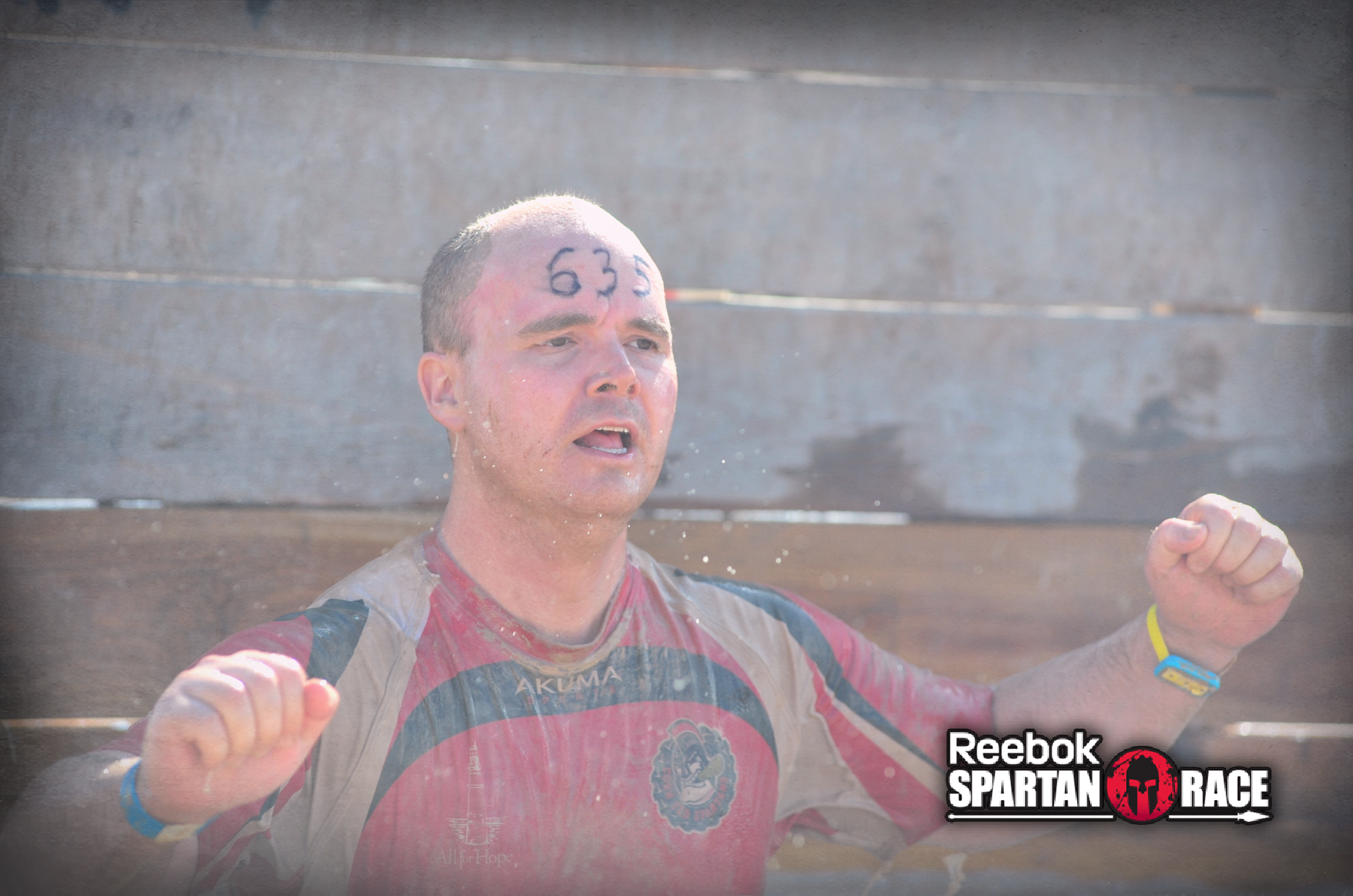
In weather as hot as this was, the dunk tank was brutally cold. Find the bottom of the wall, plug nose, and push under.
Image

Over the slick wall, over the fire, and taking a moment to mourn the serious lack of gladiators.

Image

This was by far the toughest super I have done, and on par with the SC Beast in difficulty.

US Trifecta 2/3 complete. Utah, we are coming for you.
“Legitimacy”

There has been much talk about upcoming changes to the sport of obstacle racing, particularly since Spartan made the decision to eliminate gladiators at the end of their races. This is listed as a change that needed to be made as the sport seeks “legitimacy.”

Hobie Call makes some great points about what may soon change, both to become more “mainstream” and avoid the mess that is the American court system (http://www.hobiecall.com/0414/spartan-gladiators/).

This has stirred up emotions for me, as I have seen sports degrade under ever more restrictive rules. Watching MMA hem itself into an ever smaller box over the last few years, I truly wonder why anyone can still watch it. The martial arts greats of 50 years ago would indeed be sad to see what has come to pass.

I have seen great things from obstacle racing, seeing ordinary people rise to seize their potential in ways that they never thought they could. Seeing total strangers instantly band together and work as a team. Seeing the lowliest, most worn out, injured athlete cross the finish line running on determination alone.

But, it would appear that none of that matters. Its all about TV coverage, prize money, forgetting the average Joe and pretending that the elite athletes are a completely different animal, with abilities that we mere mortals could never aspire to.

I love the true sport, the sport that pulls the ordinary person to find the extraordinary potential that they have hidden inside. That pushes each of us to be our best and let our inner light shine for all the world to see.

How to go about gaining this sport recognition while keeping the awesome experience for the other 80% of athletes who are not there to compete, but simply to finish?

I do love the idea of keeping current events and adding a new class of race to meet international standards (and the stadium sprints are a good start on this format) but I would also keep track of the participation numbers and see which format brings in more participants. Don’t underestimate the non-elites. There are a lot of us, and we are willing to put crazy amounts of money effort into testing ourselves. I have a feeling many of us will gravitate toward the Spartans that we have now, over the sanitized “official” version. Many of us look at the proposed, indoor, 2-mile courses with non-stop obstacles and think, “Okay, lots of stuff to play on, but no brutal terrain, no crazy distance, no soul-crushing, no test of will, so no point…”


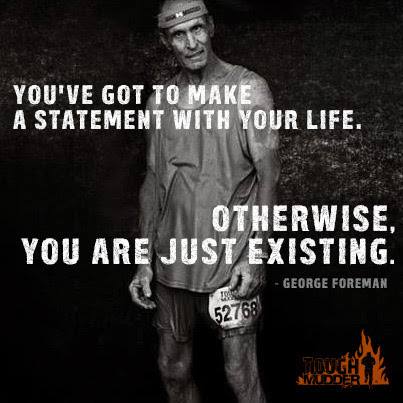
Greatness is not this wonderful, esoteric, elusive, god-like feature that only the special among us will ever taste – you know it’s something that truly exists in all of us. It’s very simple, this is what I believe and I’m willing to die for it. Period.

Will Smith

Does this really matter?

Image

Since I was little, I was always inspired by the story of the original marathon.

The brave soldier Pheidippides, pushing through the limits of human endurance, running through exhaustion to bring word of the victory, delivering the message with his dying breath.

I was somewhat crushed when the historical inaccuracies of the story were pointed out to me. After the battle, it is recorded that the entire army moved back to a defensive perimeter around Athens, so it is unlikely that a runner would have been sent ahead. If there had been a messenger sent, it very likely would have been on horseback.

Recently I was told a likely more historically accurate story of Pheidippides, and I now find him even more inspiring and thought-provoking.

As the army was gearing up to fight the Persian invaders, he is ordered to run to Sparta to request reinforcements. 145 miles through rugged mountains, 36 hours, no sleep, no rest, very little food. When he gets there, the Spartans refuse to send anyone until the end of their religious festivals. 

Carrying the bad news, he turns around and runs the same 145 miles back to join up with his comrades…to find the Persians have been driven back, he has missed the whole show, and the reinforcements that he was unable to bring back were not needed.

So why the story of the 26 mile run to death?

Pheidippides likely would have spent years muttering in his drink over being sent off on a useless errand while his brothers in arms defended his home. Everyone else gets the glory of throwing the invaders back into the sea, but the one guy sent off for help misses it. I think that over the years, those who remembered his epic determination and ability to put the good of everyone above his own desires for glory painted a picture that he would have enjoyed. Defeating the foe, giving everything to carry word of the victory home, and a death in glory that we are still talking about 2500 years later.

Image

So, what will the future remember of what YOU consider your failures, the things that you poured all you could into but could never quite make work out?

Never forget that what you see of your own life tends to be the gag reel. To often we compare it to everyone else’s highlight reel and are amazed when we don’t measure up. We think what we are doing cannot possibly matter, but never understand who may be inspired by it.

“We create the meaning in our lives. It does not exist independently. Being  Anla-shok does not mean worrying about what others will think about us.  It does not mean deciding what to do based upon whether or not it serves our sense of ego or destiny. It means living each moment as if it were your last one. It means doing each right thing because it is the right thing. The scale doesn’t matter. The where, the when, the how, or in what cause .. none of those things matter. In my life, I’ve discovered very few truths. Here is the greatest truth I know: Your death will have a meaning if it comes while you’re in fullest pursuit of your heart” 
– Sech Turval

Go out and seek what truly matters in your heart, no matter how many people think it is useless. You never know how your story will be written, or who will look to your story as an example.

Image


Big Daddy’s Wisdom: GRL 230

Image

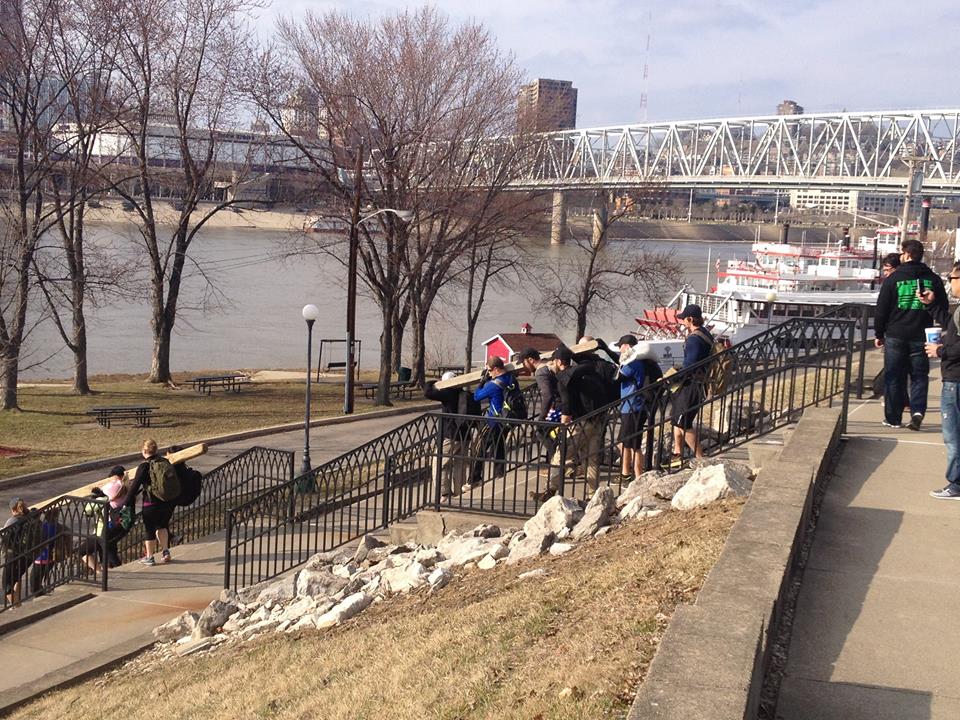
I arrived a touch late to this event and lined up expecting the usual welcome party PT session. Cadre “Big Daddy” John introduced himself, told us his background, had us do a little PT, then told us to remove our left shoes and follow him.

WTH. This has never happened before. Game on.

All of us hobbling along in one shoe, doing our best to keep up with his aggressive pace. We hit a stop and were given 20 seconds to get our shoes back on. Mental note, look for boots that tie more quickly. 

Back on the move as Cadre lead us down to the river for the real welcome party.

Image

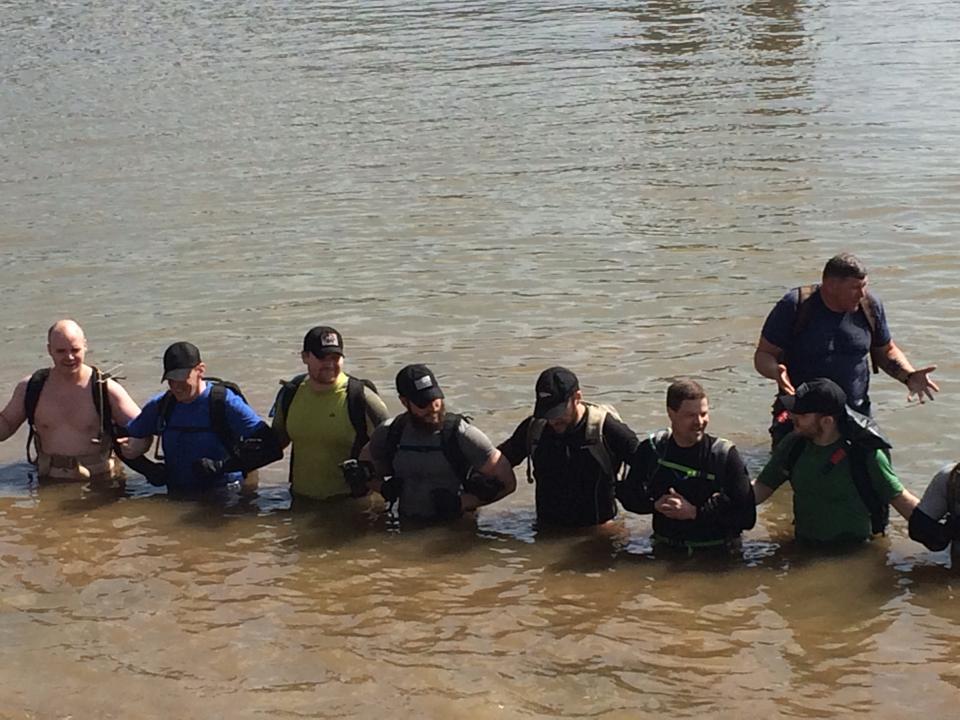
We started out with 5 and 10 second “bottom samples” where you hold your breath under water for 5/10 seconds as you grab a soil sample from the river bottom. I HATE putting my face in cold water, but pushed through as well as I could.

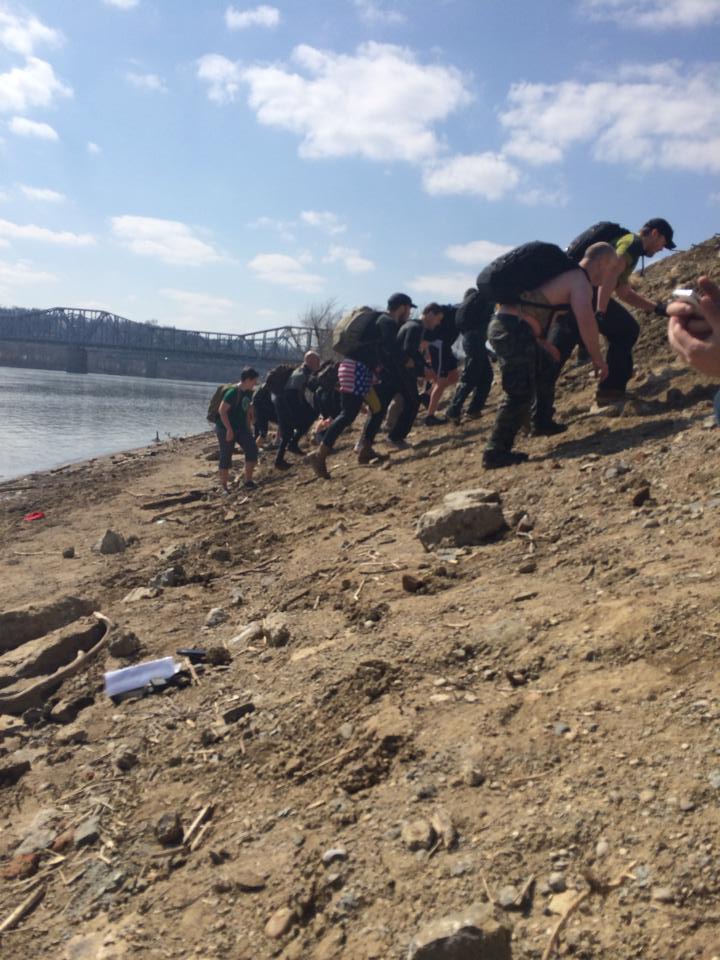
On to the bank to do the more common PT, burpees, mountain climbers, running or crawling up the hill and back.

Image

We went back out in the water, and were told that if we could do a correct 5 and 10 second bottom sample, we would be done, could leave the water, and move on to the next challenge. As much as I hate it, I was not going to be the weak link on this team.

Image

I tend to count quickly when I feel like I’m drowning, so I didn’t trust my own count for time. I held my face under until I heard those around me breaking the surface. Cadre was satisfied, and we were off.

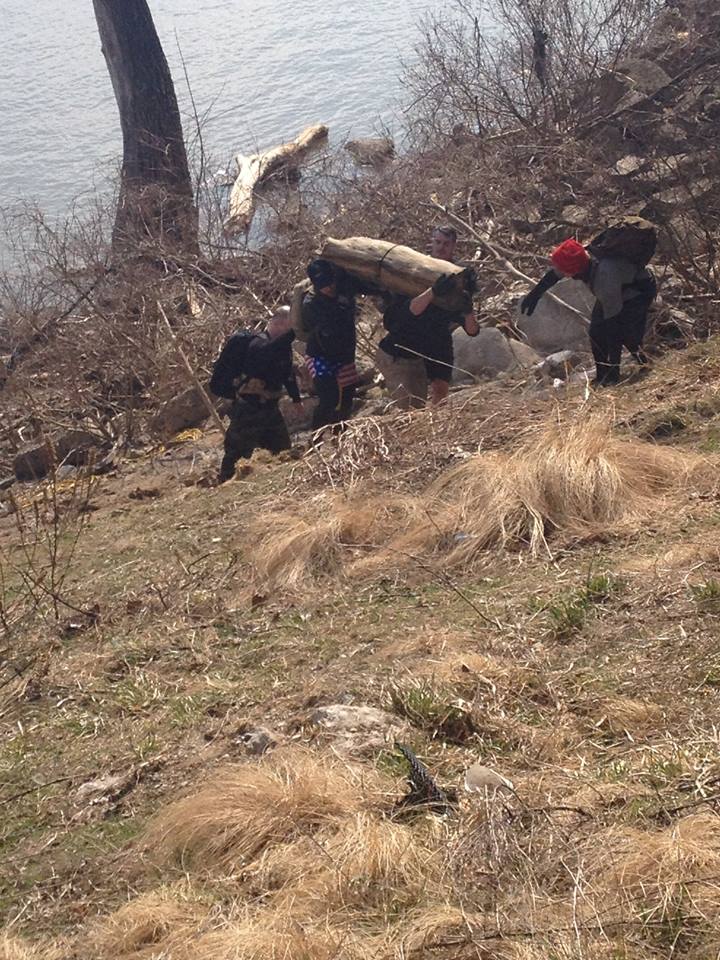
We moved down the river searching for appropriate logs.

Image

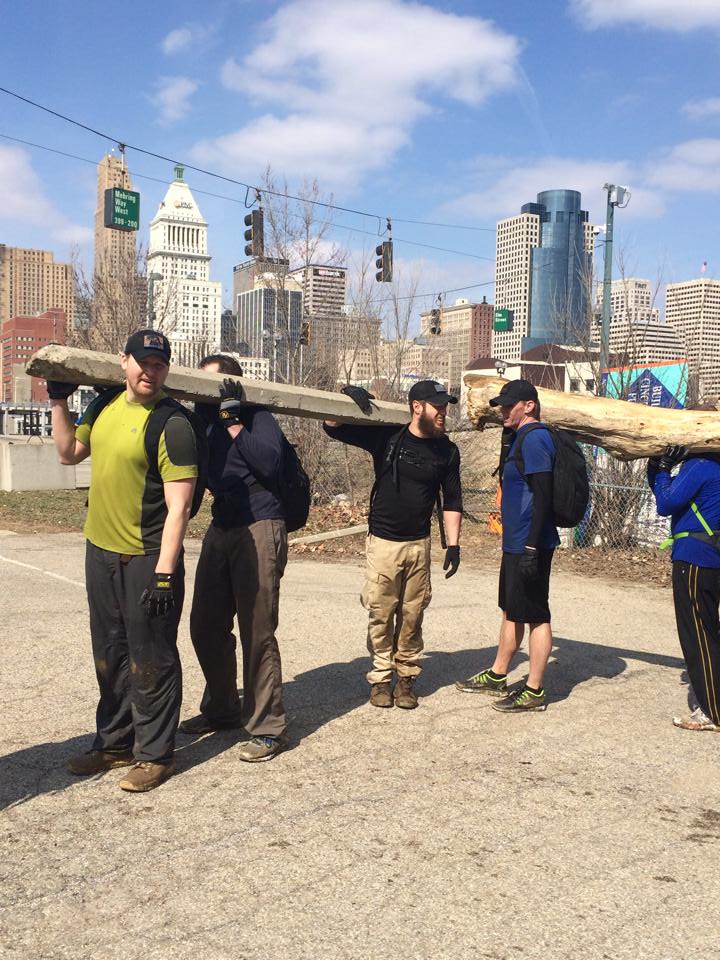
We ended up with a lady log, a test-your-manhood log, and…

Image

Yes, that is a concrete parking stop.

Off to our destination, changing out carriers as we could, across the bridge into Kentucky.

Image

Cadre continued to pick up random heavy objects for us to carry along. Sandbags. A concrete block.

We got to our fist destination, 10 minute break, flutter kicks as penance for missing our time hack, new team leader, new destination.

It was a brutal carry. It got worse when we had to carry everything down a set of stairs.

Image

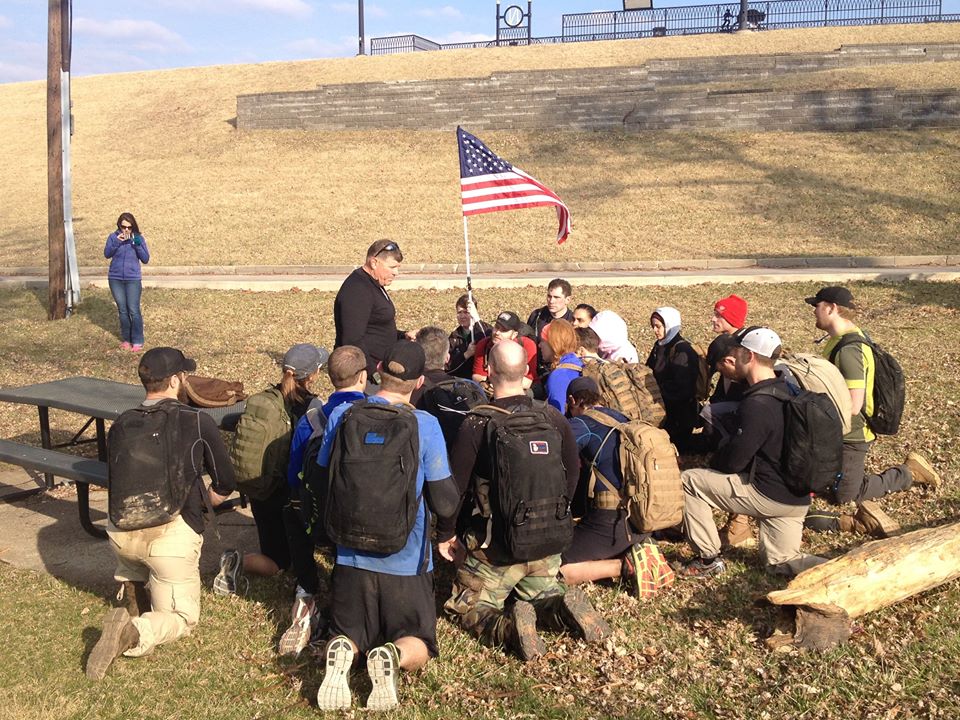
Cadre John then sat us down for a little talk that would have a huge impact on many of us. I cannot attempt to do justice to it here, may try in a future post. He talked about how we need to break through fear and false perceptions in order to become more mentally tough. He told us about recruits he trains, how he would not be permitted to push them the way he pushed us, and that he tells recruits who drop out about us.

Image

That struck home with me. Some of the most badass among warriors are inspired by us. That makes me want to push harder.

We were permitted to get rid of the big log, and went on our way with the rest of the load. Next curveball was inflicting casualties when we failed to stay in tight formation, meaning we have people to carry in addition to all the rest.

We hit the next destination, got rid of the heavy items, and bear crawled, lunged, and buddy carried our way back to Ohio. Sometimes without our right shoe.

Image

We got back to our start point. Big Daddy said a few words on what we had accomplished, ran us through pushups with all of us shouting “Attention to detail” “Teamwork breeds success” “GORUCK” “Tough”

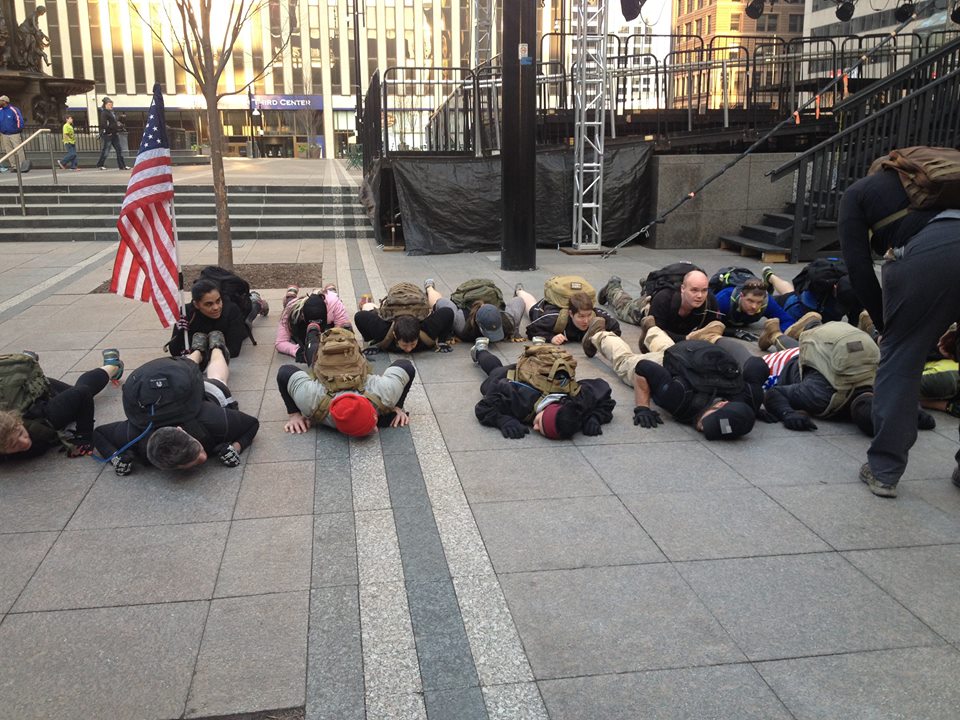
He instructed us to stay in bottom pushup position until he came around and stood in front of us.

Image

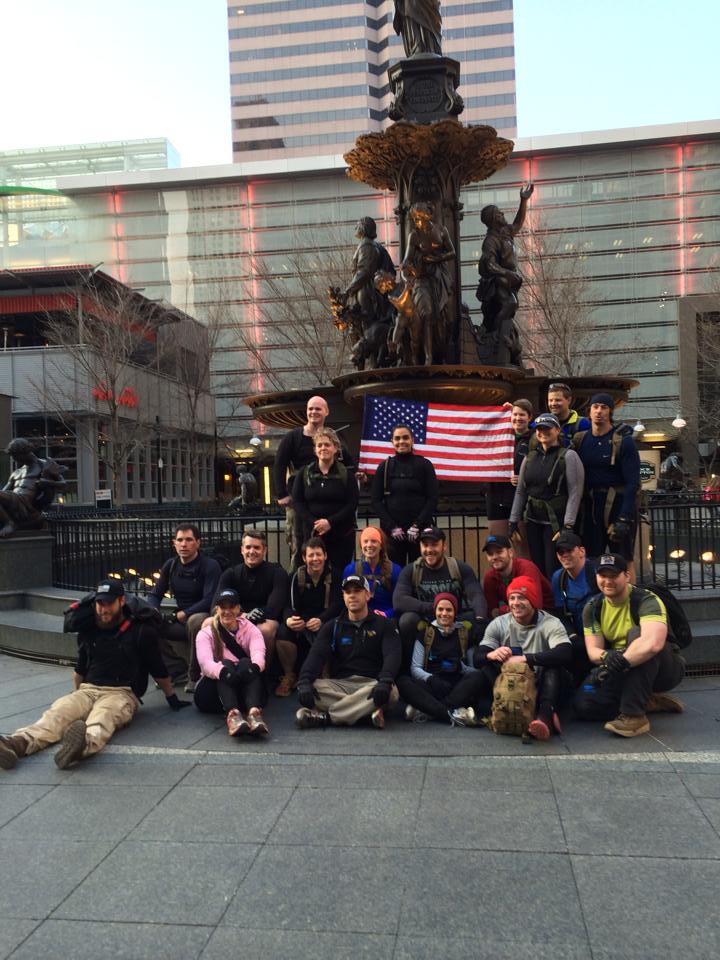
As each came to his feet, Cadre would shake your hand, give you your patch, and congratulate you on completing.

Image

This event was a great time, and we all pushed hard to get through it.

It also exposed several weaknesses in me that I need to correct. I have full GORUCK Challenges coming up that will be this tough and twice as long.

So I did what any Rucktard would do. Drove the 3 hours home, put on my ruck, put on my resistance mask, and went for a training ruck. Cadre had told us to push through mental limitations and see how far we could go. Tired, feet still wet and sore from the event, legs stiff from hours in the car- still getting another 4 miles in before bed.

Image

Someone Else’s Dreams…

The world we live in is constantly telling us what we should do, how we should behave, what we should want.

This starts when we’re too young to know better, so we do as we are told. We go and “chase our dreams.” We marry the girl, buy the house, get the promotion, buy the bigger house, have the 2.3 children, buy the bigger car to accomodate them.

And then at some point, it hits us like a sucker punch.

We have no idea who we have become.

We went out and achieved the dream… but never realized it was someone else’s dream that we achieved. In never questioning what we “should” do, we never even considered what we wanted to do.

Image


We realize the trap we have fallen into, and immediately try to break out. How we go about this breakout is as individual as all of us are. New car. New girlfriend. Going after a crazy athletic goal that you never did when you were younger. Putting effort into perfecting your physical form.

Then we are caught by a second sucker punch.

Those closest to us, those who we love the most dearly, reject the changes that we are trying to make. They encourage us to keep eating like we always have, not to spend so much time on foolish endeavors that we can’t possibly achieve. To stop being “irresponsible” and maintain the status quo.

To sit down, ignore the fact that we are in a cage, and just focus on how nice the cage is.

We really can’t blame them for reacting this way. After all, what we are doing is reckless. We have achieved the dream, why would we want to change that?

Because it’s not our dream. We want a dream of our own.

Image

Let me say this as clearly as I can. Re-read it as many times as needed for it to sink in.

This life is yours. It is all that you have. You don’t have enough of it to live out everyone else’s dreams. Live out yours.

Those around you will not understand. They will discourage you. They will tell you it’s impossible. They will try to sabotage you. 
Ignore them. It is not their life to live. Let them stay in the safe, comfortable patterns they have always known. But don’t let them tie you down there. Choose your own course, and don’t let anything hold you back.

Image

The die is cast…

I did something last week that scares me.

I saw that the registration for the Spartan Ultra Beast had opened, and that there is no requirement to submit a race resumé this year. I was registered within 15 minutes of learning this.

I have seen how brutal the course is. Friends who are far better competitors than I am have failed to complete it. Not quitting is not enough, miss a time cutoff by a second and you will be pulled from the course.

And all of this only serves to make me want to push harder to get through it.

My 50K time was rather disappointing last year.

My next will be better.

There are some obstacles that I have never been able to complete.

I have 6 months to learn to do them or get REALLY good at burpees.

I’m not sure if I can actually do it. Other than the odd ability to keep moving when most people have the good sense to realize it’s hopeless, I’ve never had much ability in any sport realm.

But that’s the fun of it. What glory is there in knocking out events that you know damn well you can complete without difficulty? What do you learn from victories that you didn’t need to fight for? It is when we are broken down to nothing, when it takes all we have simply to continue, that we see what we are truly make of.

I want to see what I can do. What I can take. If I can do it in time, which has always been the toughest part for me.

And in this moment, I know where to go to find out.

Spec Ops Spartan: Tampa Spartan Sprint 2014

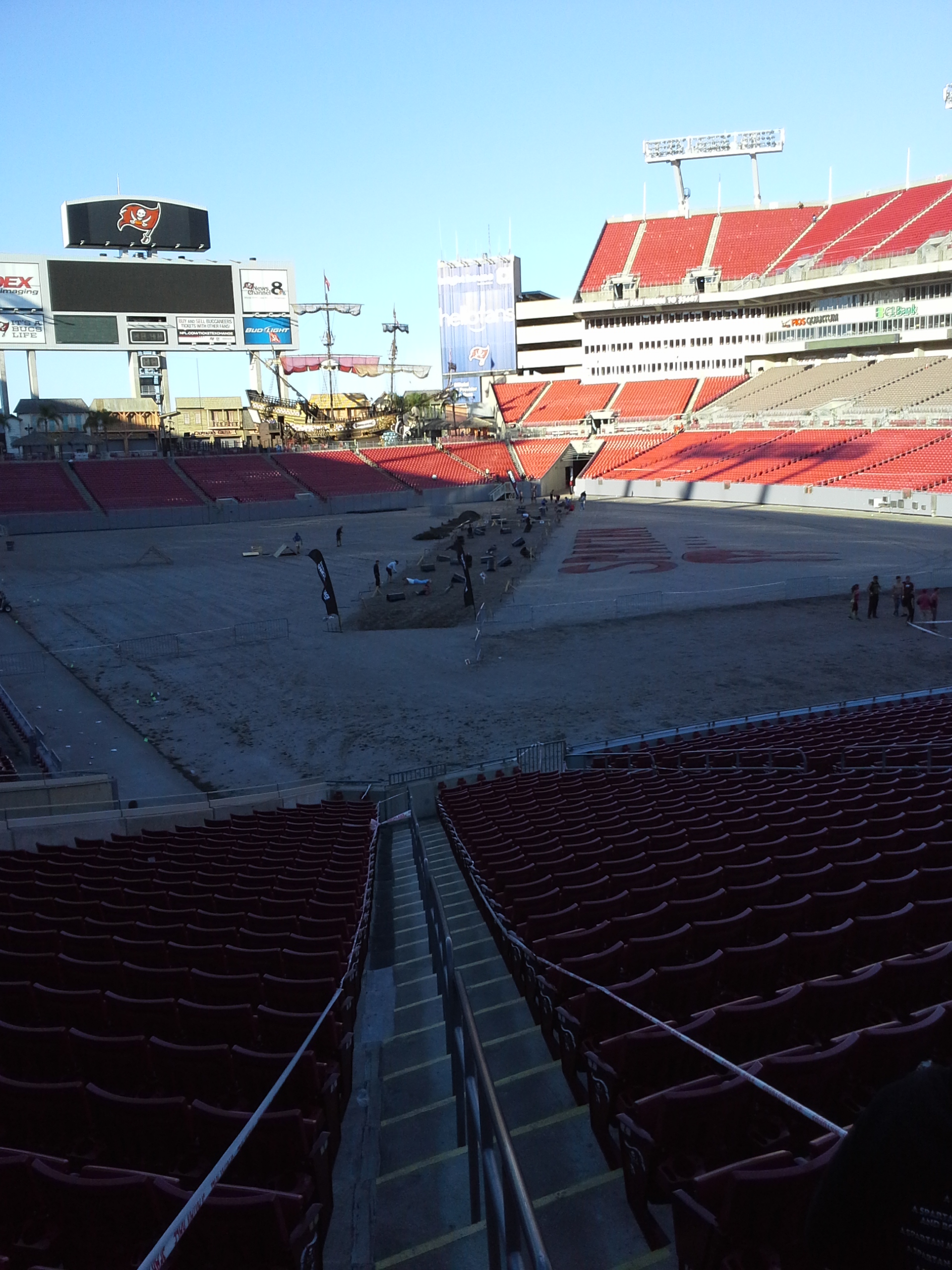
I heard that Spartan was putting on a new sort of race, partially designed by US Special Operations, and that they had torn up the Tampa Bay Buccaneers’ field to give us a barbed wire crawl.

I’m in.

20 hours driving, 15 hours to recover, and enter the starting corral. Rather than the traditional “Arroo! Arroo! Arroo!”, for this race we were sent off with, “Hooyah! Hooah! Oorah!” and we were off, up way too many levels of ramps to reach the first obstacle. Under a camo net that the timing chip band got caught in, closely followed by the usual SR over-under walls, lots of stairs, and the over-under-through walls.

Next was the Hobie hop, which is probably the least popular event for stadium races. Several of us realized on the way up that wo looked like cartoon joggers, waddling up the stairs and pumping arms to keep balance. Coming down I used the handrails more and was able to swing down a few steps at a time, making it a bit quicker.

Back outside for the traverse wall. Ran into some teammates, spotted each other across, and made it through with no burpees.

I actually enjoyed the sandbag carries at this race. Longer than most, lots of stairs. I found I could adjust my stride to match the stadium stairs, and shuffled a lot more of it than I walked.

We next came to the football toss, which I missed and can now say that I have done burpees on an NFL field. One of my teammates was struggling through his burpees next to me, me at 20 and him at 10. We counted off 10 together, then did a set of 5 together to wrap up his 30. On to the barbed wire crawl.

Sandy soil, barrels to crawl around, wire really low in spots. They had also added objects like mortar and artillery rounds for decoration.

Image

The Hercules Hoist was heavier here than on past races, a challenge but completed it without too much trouble. The Atlas carry had changed from the usual cylindrical concrete weights to round Atlas stones. I hope this change is adopted, not having that edge to grip on does make it considerably more difficult.

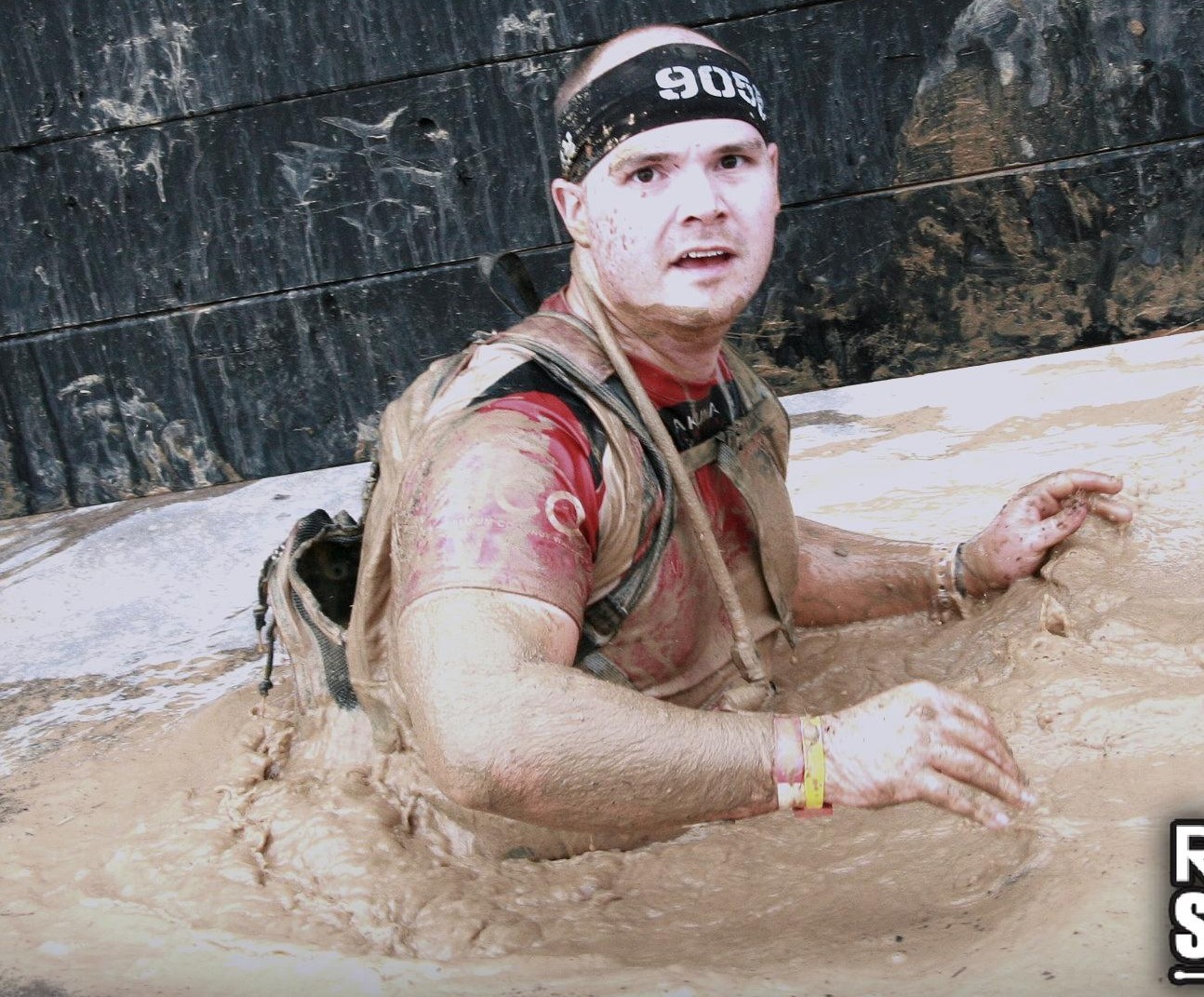
Next were muddy trenches while being sprayed with a fire hose. I didn’t get a picture of me being hit by the hose, but this is what it looked like:

images

Next was a quick farmer-carry with water-filled ammo boxes, a taller-than-normal reverse-incline wall, and the spear throw. My spear throw is improving, but not enough to prevent burpees.

30 feet from the burpee area was the rope climb. I and the man I was doing burpees with after the spear throw both agreed that a rope climb just after 30 burpees was not going to happen today, so we went straight to the next burpee area and counted them off together.

I would usually walk for a few minutes after burpees before picking it up to a run again. But with the finish line in sight and cheers of encouragement  coming from the sidelines, there is no choice but to run the last of it. Through the ditch, over the slick wall, over the fire, and through the Gladiators’ pugil-stick high fives.

We received both the standard Sprint medal, and the special camo medal just for this event.

028

This was a really fun race, but I cannot shake the feeling that it fell a little flat. Nearly all of the obstacles that I consider an honest challenge, the monkey bars, the tire or log flip, were absent from this race, and were not really replaced with the hard-hitting anaerobic challenges of the stadium sprints, the rowing machines and medicine-ball slams. It was neither the long, muddy, nasty field sprint nor the intense, lung-burning stadium sprint. The overall feel was more like… Warrior Dash.

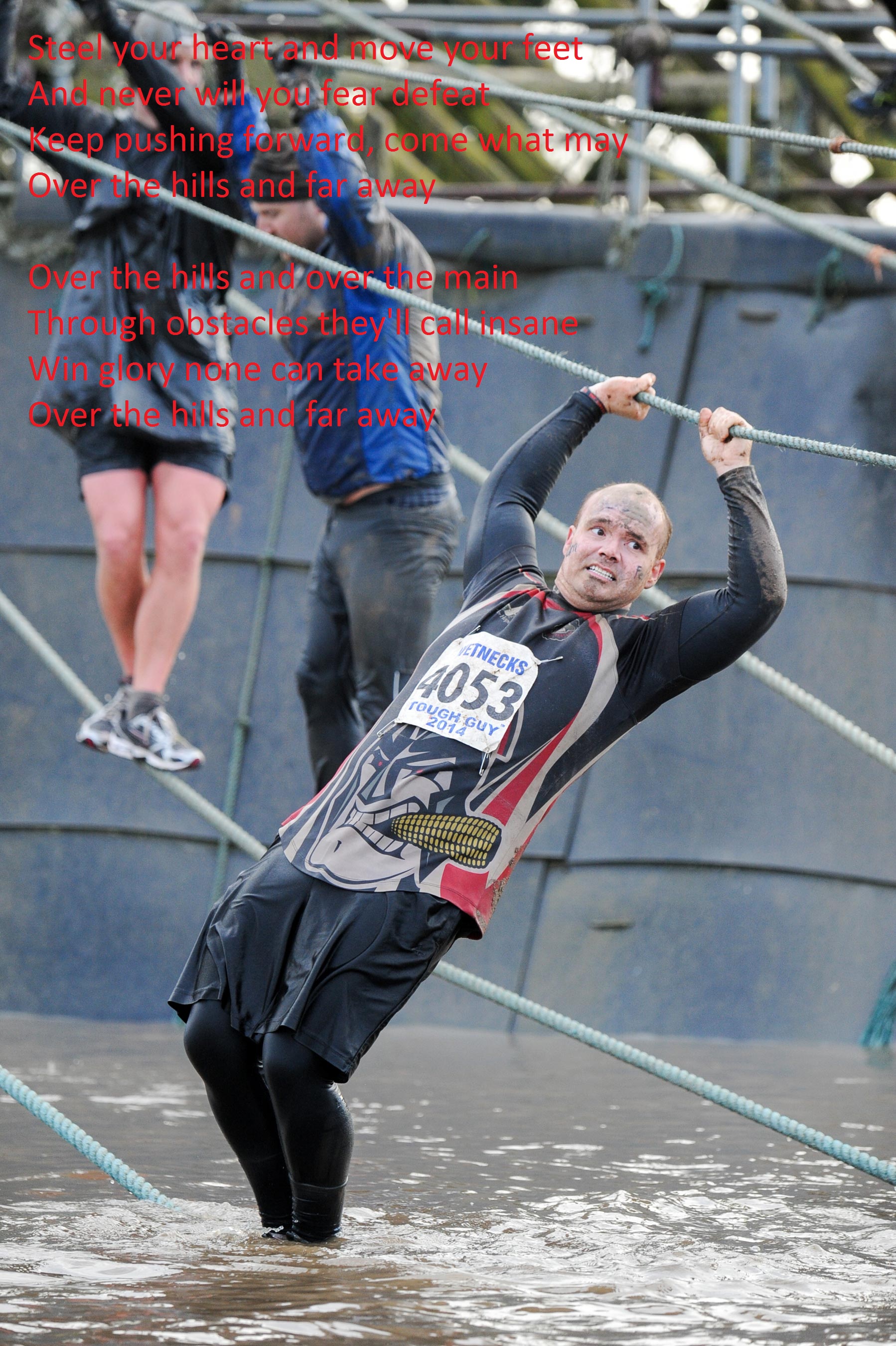
Over the Hills and Far Away: Tough Guy 2014

Image

A teammate posted a Youtube video about an English race called Tough Guy in January of 2013. That was honestly all I knew of the race, but I immediately knew I wanted to go after it. I found out about it too late to attempt 2013, but signed up for 2014 as soon as registration opened. I figured with a year to train and sort out finances, anything can be done.

Travel getting to Wolverhampton was an adventure in itself, but another story for another time. I was able to meet my teammate, get to the race venue, and find everything that I needed.

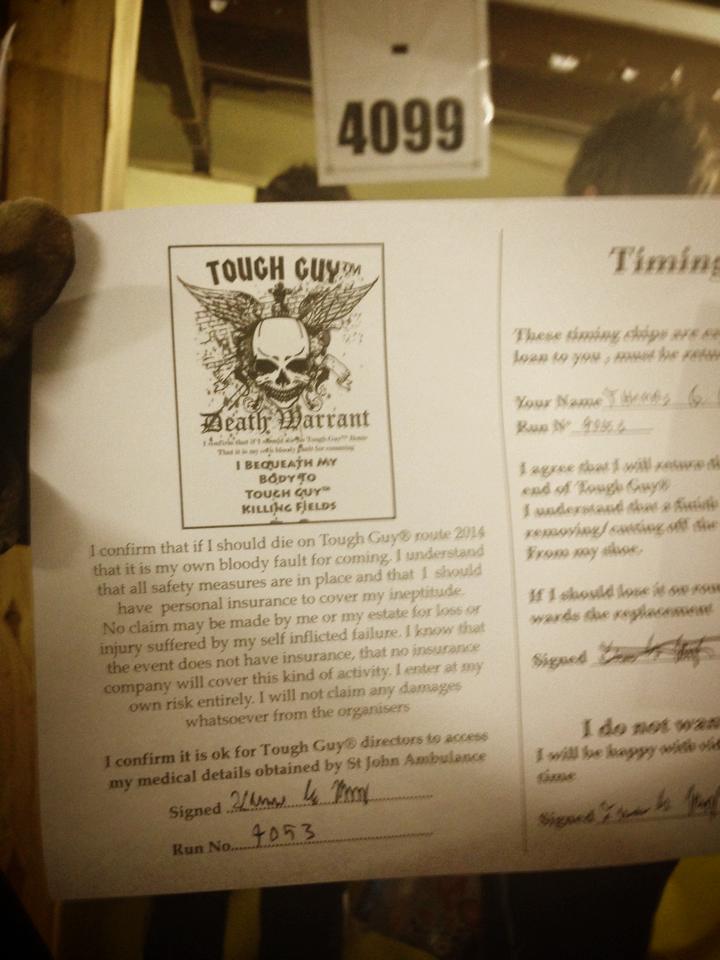
What Americans call death waivers, the British call death warrants. And there is something undeniably cool about saying you have signed your own death warrant. Particularly when it is phrased like this:

Image

We found the gear storage/changing area, chatted with some of our fellow competitors from around the world, and when we saw the herd moving followed it to the starting line.

I will always love the wry humor among athletes at the starting line. You can see the front of the pack getting worked up and sent off, but through the crowd you often cannot see where you will be going. The conversation drifted to, “I was just following the crowd. Is this where we start from, are are we accidental spectators? By the way, crap its cold…”

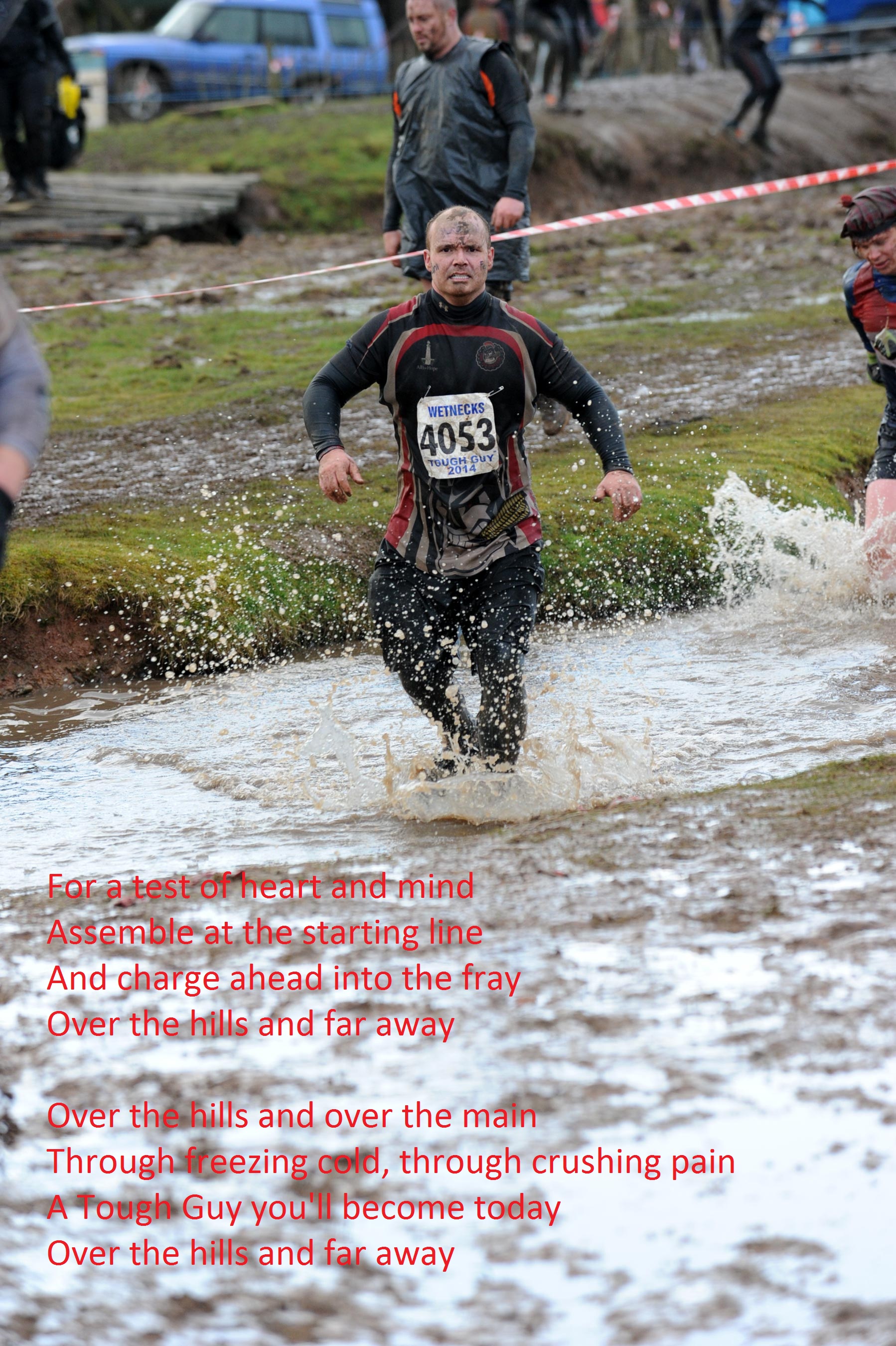
The leaders went off, accompanied by WWI reenactors on horseback, and the crowd around me started moving, up the face of a steep hill and then sliding down the sheer mud face of the opposite side, and we were off.

It is always interesting to see what you pick up on when you enter a different culture. The first thing that hit me was that the shouts of encouragement were different. Rather than the “ARROOOO” or “HOOOAAAHHH” you hear at stateside races, what I heard here was a chant of “HOO HOO HOO HOO” or a call and response of “Ooggy ooggy ooggy!” “OY OY OY!!”

The first 3K of the 15K course was mainly muddy trail running, a few waist- or shoulder-high log barriers to go over, but nothing too challenging. We hit the first aide station at 3k, where the 12K option would start. The aide station had run out of cups. The only time I have ever been handed a 4-gallon carboy and instructed to drink from it.

More trail running through the slickest mud I have ever seen. Bear-crawling up hills under nets and sliding uncontrollably down the muddy slope down to the beginning. (Insanely fun, worth the price of admission by itself.)

We came to a bottleneck on the course. A course official, painted in death-face (I would later realize he was a medic) directed us to form up to the right of the trail to open up the left. I didn’t realize until the crowd started cheering that the backup was due to removing an injured racer from the course on a stretcher. I was impressed with the encouragement the crowd showed him, much warmer response than I would expect to see back home.

Up and down steep wooded hills, scooting and crab-walking enough to joke that the race should have been called “Hard Ass”. I was having fun, but was about to think that the race was over-sold.

Then we hit the mud pits.

A single mud trench that you must navigate back-and forth roughly 20 times. Trench is about my height in depth with waist-deep mud and water.

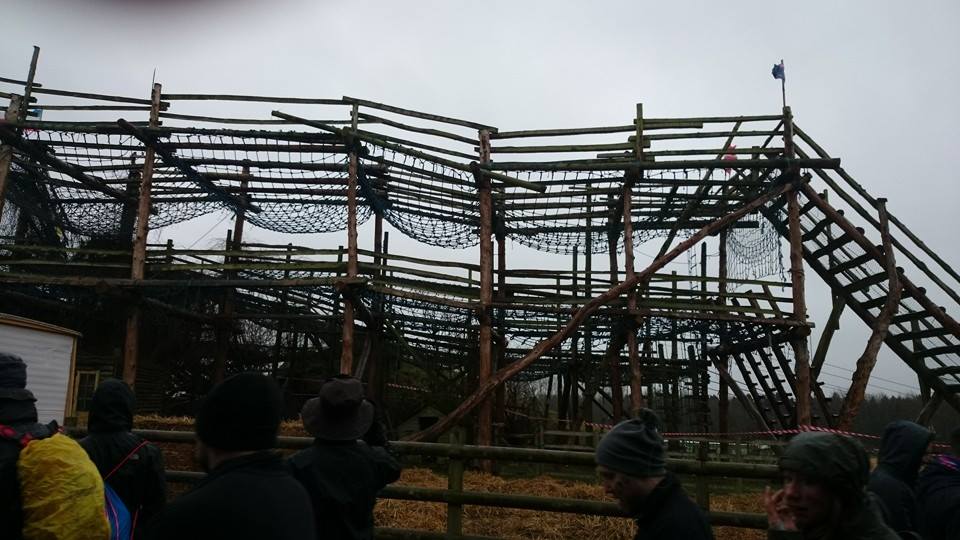
The most visible obstacles are the huge log structures that you must climb up, navigate a cargo net, balance beam or rope traverse, and climb back down. Not technically difficult, but gritty and, for me, a lot of fun.

Image

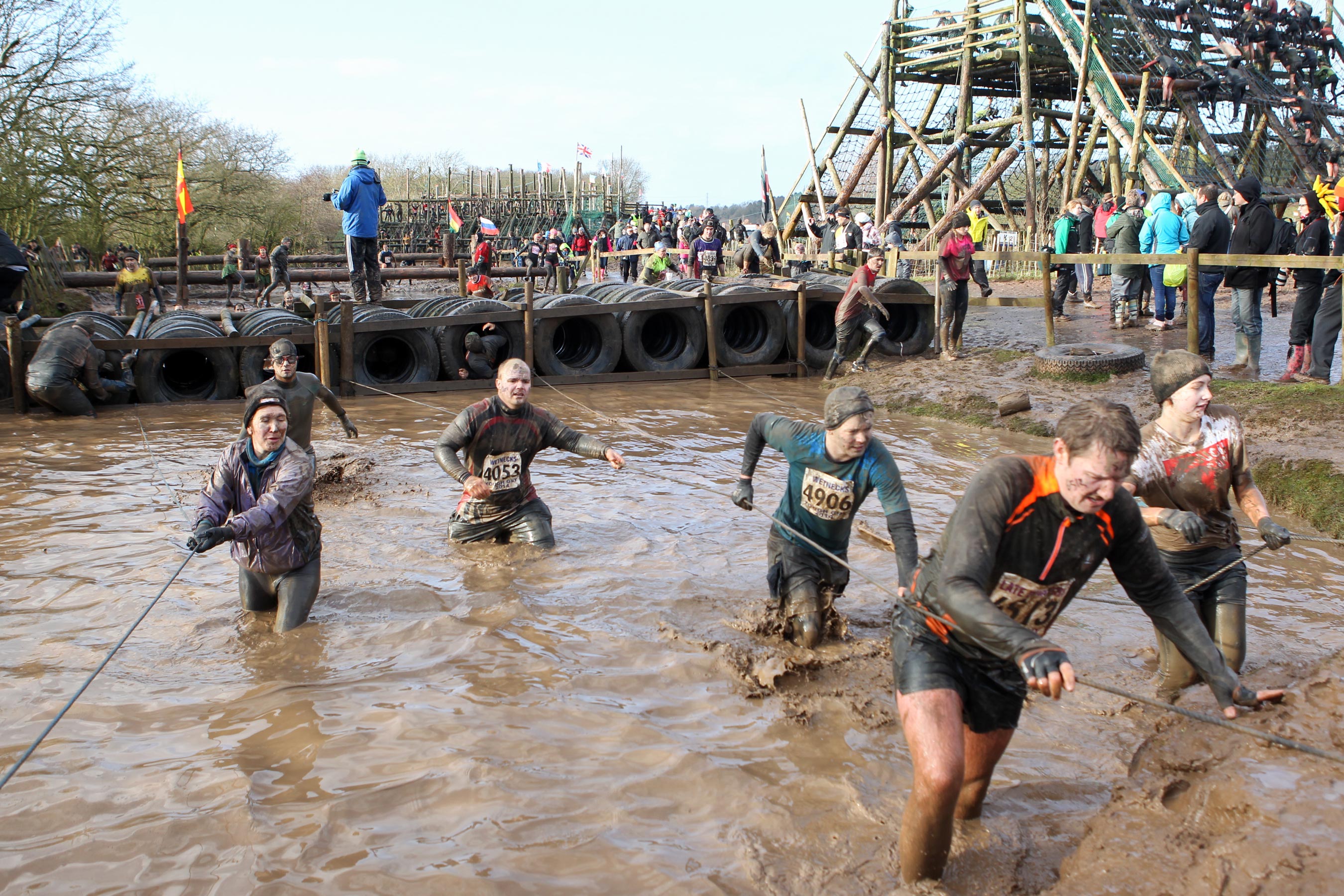
Then we came to the heavy-duty water obstacles. 500 yards at a time, through chest-deep water, just a few degrees above freezing.

Image

I also found the obstacle of crossing the water, crawling through a stack of tires, trying to exit without falling into the water completely, and then crossing the rest to be difficult. Most of the spaces I have had to crawl through have been much wider and not nearly as uncomfortable.

Image

But by far the worst was this thing:

Image

Wade 50 yards through 34 degree water, go under 4 or 5 logs in succession, and then swim 20 yards to the shore. This was undoubtedly the low point of my race.

About the second log, by body started to rebel. My calves locked up and refused to work. I usually suffer in silence, often even with a smile and a weak joke. This affected me enough that I broke down screaming.

When I finally made it to she shore, it took 3 separate attempts and much swearing just to be able to get to my feet. It is very humbling and more than a little embarrassing to have to work that hard just to stand up. One of the photographers gave me a word of encouragement, but I can’t for the life of me remember what he said. I think my brain function was going downhill due to the cold.

I kept stumbling forward, hoping the exertion would warm me up, and just as I was starting to regain full function I would have to go in the water again.

I tried hard to stay out of the water on my last rope traverse, but with several people on the ropes it was too unstable. I was able to step off the lower rope and hand-over hand it the rest of the way with my lower body in the water.

Image

There comes a point where your thinking and your memories get fuzzy, but you know you must be almost done and you keep pushing on. Up the hill, across the water, down a slide with hanging electrified wires.

My one teammate who attended this race with me said she was disappointed that there was no last run of glory at the finish line, as there is at Spartan Race, but just a walk down the hill to people who will cut off your timing chip and give you your finisher’s medal. The low-key finish suited me just fine. None of us could manage more than a quick hobble at that point anyway.

The cold really and truly set in after the finish line. They gave me a cup of hot chocolate, but I was shaking so hard that I spilled most of it before I could drink it. Got toweled off and changed into dry clothes and got back to the hotel for a hot shower, and things got better.

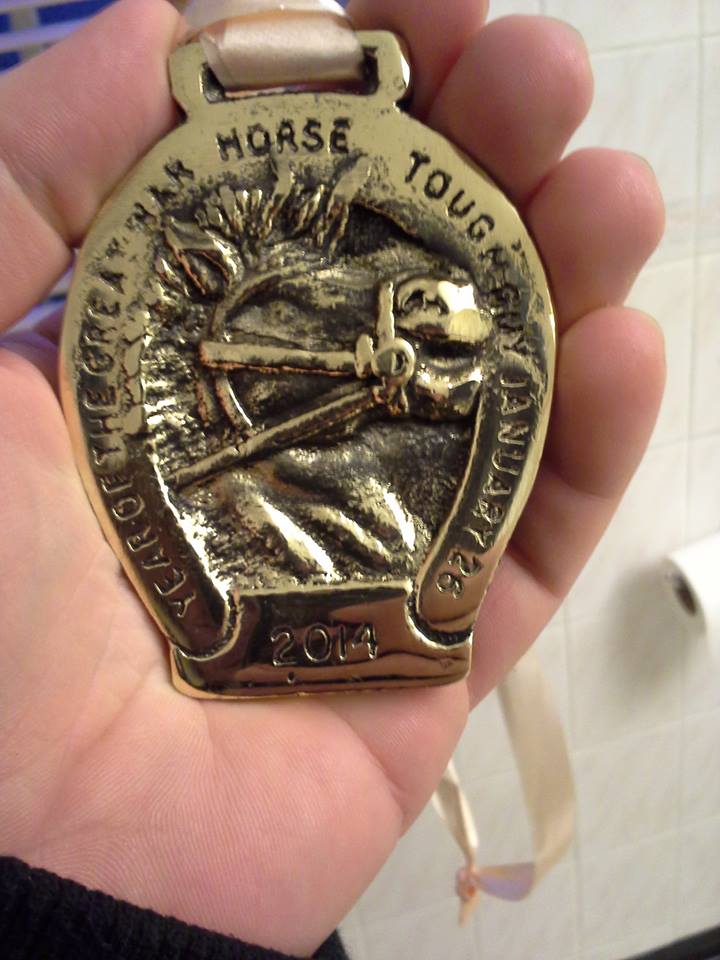
I allowed myself one of my very few cocky Facebook posts at the conclusion of this race. I posted the below photo of my epic rifle-brass finisher’s medal with the caption:

“As I walk through the valley, having signed my death warrant, I have no fear.
For I am the baddest mofo in the valley.”

Image

This race was an epic challenge, not so much of speed or strength, but of force of will and the ability to keep stumbling forward, even if one step at a time is all you’ve got left.

Image

Logistics for Tough Guy

I just completed Tough Guy 2014 in Wolverhampton, England. Several friends have expressed an interest in doing the 2015 or 2016 race, so I am offering the following advice. I stumbled around England, occasionally wondering if I was even going to be able to find my way there and back to the airport. This information should make your trip smoother than mine.

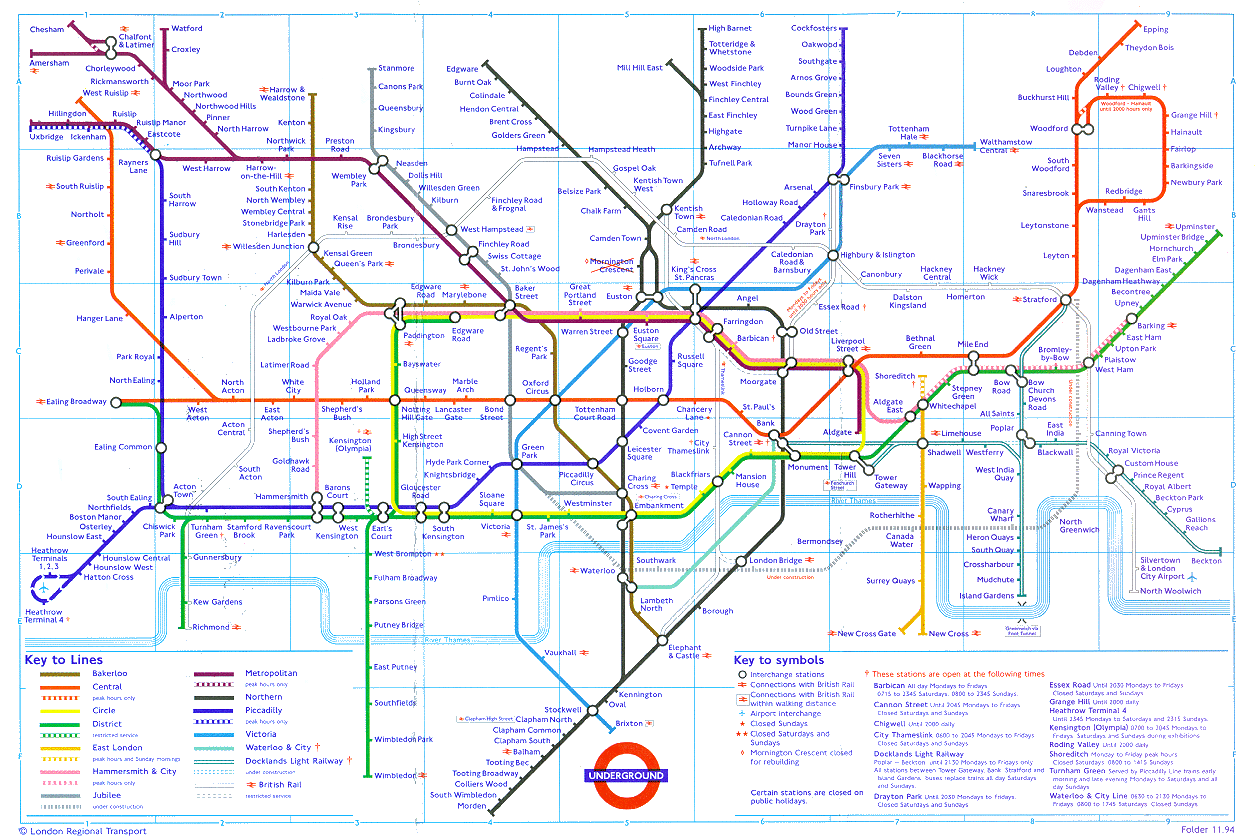
I flew into London Heathrow airport. All terminals have a connection to the Underground (what us Americans would call the London subway system). Take the Piccadilly Line to Leicester Square (pronounced like the name Lester), then take the Northern Line to Euston. Go up the stairs to the surface-level train station and you can catch a train to Wolverhampton from there and take a cab to your hotel and/or the race venue.

tubemap

I stayed at the Mount Hotel (http://www.booking.com/hotel/gb/mountcountryhouse.en-us.html?sid=c6493172d7ca8265055bcfc90d6911d2;dcid=1;srfid=f0ea2c73a04d7a89129816aca246a94d7b123fc9X11) and booked the room through Booking.com so that I could pay in US currency and not get the foreign exchange fees from my bank. I made sure to keep my booking printout with me, so I could just show it to the cabbie and he would know where to go.

I highly recommend this hotel, they were awesome. Comfortable room, WiFi, close to the venue, and enough Tough Guys stay there that the staff knows the event. They were also great about arranging a cab to pick me up when I needed it.

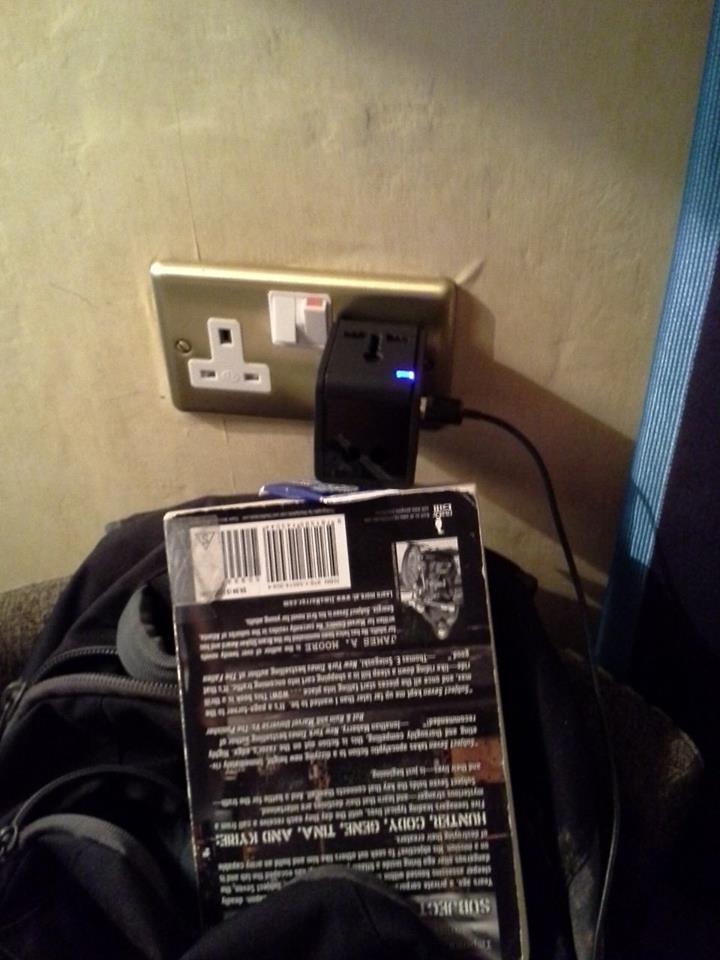
The UK uses different electrical fittings than the US. Pay the extra money for a quality adapter. This is what was required to get the cheap adapter I had to stay connected:

Adapter

Finances:

Room was about $100 US per night. Trains from the airport to Wolverhampton and back totaled 116 pounds. Cab fare from train station to hotel, to venue, back to hotel, and back to train station came to around 40 pounds.

Food costs about the same number of pounds as you would expect to pay in dollars back home. So, in short, plan on double your normal food budget while in country.

Be advised that the British do not mark roads nearly as clearly as Americans are used to. If you plan on checking out anything on your own, bring a GPS that does not rely on cell phone signal.

And lastly, this needs said: DO NOT underestimate this race. It is completely conquerable, not impossible, but be aware that it is a mean course. It will knock you to your knees if you give it the chance. Invest in good cold-weather gear that can stand getting wet, and train in the cold as much as you can.

The obstacles, while awesome, do not require the same level of strength as many Spartan Race obstacles, but the conditions and the amount of time you will spend in cold water require MUCH more grit.

And THIS is what you will have to sign at the starting line:

Image

The DNF Files Vol. 1: Tecumseh Trails Marathon 2013/14

When I was first planning out events for the 2013 year, I threw in a trail marathon to end the year in style.

It was cancelled due to snow emergency and rescheduled in early 2014. While this caused a few problems, as any rescheduling will, it was the best arrangement that could be made to fix it.

The week prior to the race included 16″ of snowfall that then melted off in the days immediately prior to the event, making for some interesting trail conditions. Also due to weather and travel concerns, the route was changed from a simple point-to-point to a hybrid route of 4 miles out, circle a 6-mile loop three times, and 4 miles back. The effects of 400 people treading over soft, water-logged ground three times would make the trail conditions even more interesting.

Made it to the venue on race day, got checked in, and chatted with the other competitors at the start line. Once again missed the starting signal, but when the rest of the herd moves, you go with them.

The first mile was uneventful, then we came to the first stream crossing, swollen by the melting snow. Two lines formed, one trying to find a route around and the other rock-hopping (across ice-sheeted rocks) to get directly across. I took the direct route and was able to spider-scramble from rock to rock and to the far bank. I then turned back to help the next few people behind me before moving on.

Trails got more deeply ground into the ground, to the point that rather than looking for course markers you just followed the furrow of torn-up mud. It soon became clear that trying to keep my feet dry was going to be a beyond futile effort.Sucking mud, wide stream crossings. I stopped to help the few runners behind me over the first few crossings, but when we got to crossings that not even I could do anything but splash through, there was no further point.

We reached the park trail barrier that marked the end of the first 4 miles and the start of the repeating loop. Course officials look at you a bit odd when you go over things they intended for you to go around, but no one objected. The terrain got noticeably steeper, including a brutal hill that I came to think of as The Reaper, the only place on the course where I had to stop and catch my breath. It honestly reminded me of Mont St. Marie, where the Ottawa Beast was held.

After The Reaper, terrain was technical but not all that bad. Walk the uphills, shuffle the downhills. The deeper the mud got, the harder and less stable those downhills got.

Second loop: The Reaper with torn-up slick mud as my running surface slowed me down even more. Wherever possible we all ended up running next to the trail rather than on it to try to find some sort of traction. It was not uncommon to go mid-calf deep in the mud and require some effort to get your feet back out.

I started cramping badly this loop, and I think other racers heard me explaining to my appendages, “No, you are MY body, you will do my f***ing bidding, You will keep working!”

I was able to find salt for the cramps and ibuprofen for the pain at the next aide station, then back to the task at hand.

I asked the course volunteers for the time at the end of this loop, and found that it was 2:21. I would need to complete the third loop and a little more to get to the checkpoint by 4:30 to avoid getting pulled from the course. OK, possible but pushing it pretty hard.

Third loop: Oh. Dear. Lord. 

Not only had the footfalls of those ahead of me cut a trench in the ground and driven the groundwater above the surface, but that water was actually flowing, 6″ to a foot deep in many places. We had literally carved out a streambed with our feet.

The going was much slower, much more tiring with the additional mud to get my feet through. Reached the end of the third loop to check the time: 4:27. Dammit. Don’t think I’m making the checkpoint.

I made the best time I could getting the next mile or so to where I would turn toward the final 4 miles to the finish line, and sure enough an official stopped me, informed me I had missed the time hack, and pointed me toward the most direct path back to the start line.

About half a mile later, a truck carrying another DNF stopped to give me a lift the rest of the way. The cutoff had been 4:30; at 4:49 I was at the finish line explaining to the record keepers that the two of us had missed the cutoff. That damn close, 22 miles in.

I realized that the time spent helping others on the course would have swung the balance just enough to get me ahead of the cutoff, but that is the one thing that I would do the same, even knowing the result. There was nothing that last 4 miles would teach me that the previous 22 hadn’t already.

Things to learn from this to kick the course’s ass next year:

Carry pain meds and S caps. Had never needed them before this, but dealing with the cramping more quickly (and doing it on the move rather than stationary at an aide station) might have made a difference.

Too much of my running, for the sake of convenience, has been on paved trails near my apartment. Too flat and too solid to prepare me for a run like this. I need to get back to running on ungodly-steep dirt trails, particularly in foul weather.